
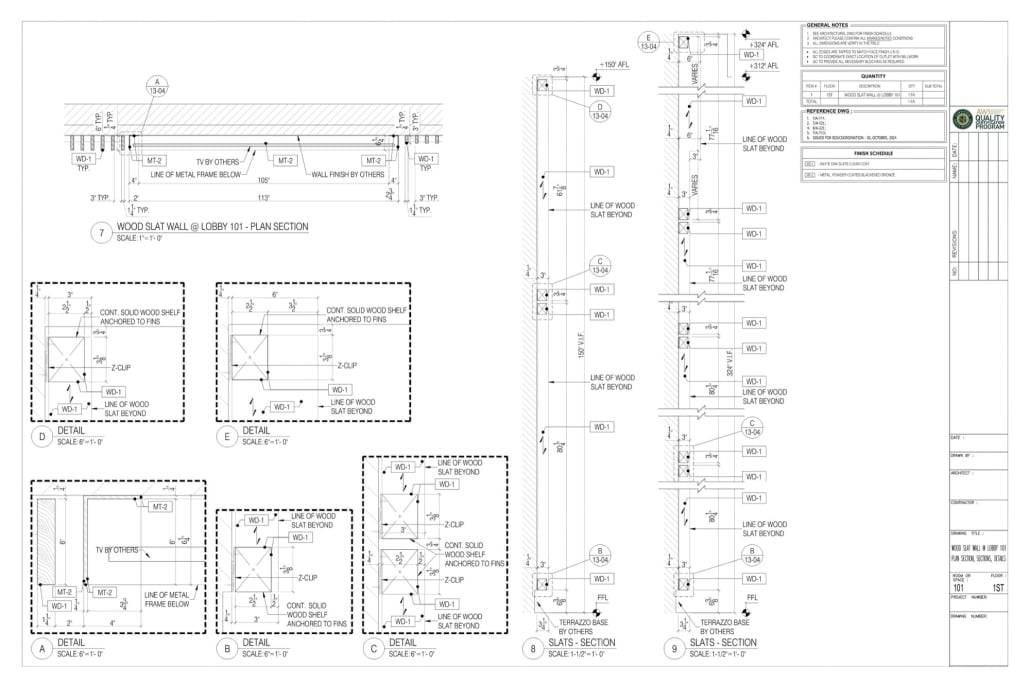
SHOP DRAWING SUBMITTALS: WHAT GOES IN AND WHY THEY COME BACK
The set is finished. Before anything gets cut, it makes one round trip for a stamp.
The drawings are finished. Nothing gets cut yet. First the set travels to the general contractor, then to the architect, and comes back with a stamp on it. That trip is the submittal, and on a commercial job it decides your schedule more often than the drafting does.
We send packages into this loop every week as part of millwork shop drawing services, so what follows is the process as it actually runs, including the stamps that look like approval and are not.
Contents:
- What a shop drawing submittal is
- Who is in the loop
- What goes in the package
- The stamps and what they oblige you to do
- What the architect’s review does not cover
- Timing, long lead items and the submittal log
- Why packages come back
- How to shorten the loop
- Shop drawing submittal FAQ
What a shop drawing submittal is
A shop drawing shows how a piece will be built. A submittal is the act of formally handing that drawing, along with everything supporting it, to the design team for review before fabrication. One is a document, the other is a transaction with a record attached.
The distinction matters because the submittal is what the contract is written around. Specifications list which items require submittals, in what form and how many copies. Miss an item on that list and the shop can be told to stop, however good the drawing is. If the drawings themselves are the question, we cover what a set contains in the guide to shop drawings.
Who is in the loop
On a typical commercial job the package moves through four hands, and each one can stop it.
The fabricator or their drafting partner prepares the set. The general contractor reviews it first, checks that it matches the contract scope and coordinates it against other trades, then forwards it. The architect, sometimes with a consulting engineer, reviews for conformance with the design and returns it stamped. The owner may see finish samples but rarely the drawings.
That first stop is the one people forget. A general contractor who forwards a package without reading it is not helping, because anything they should have caught comes back later with their name on it.
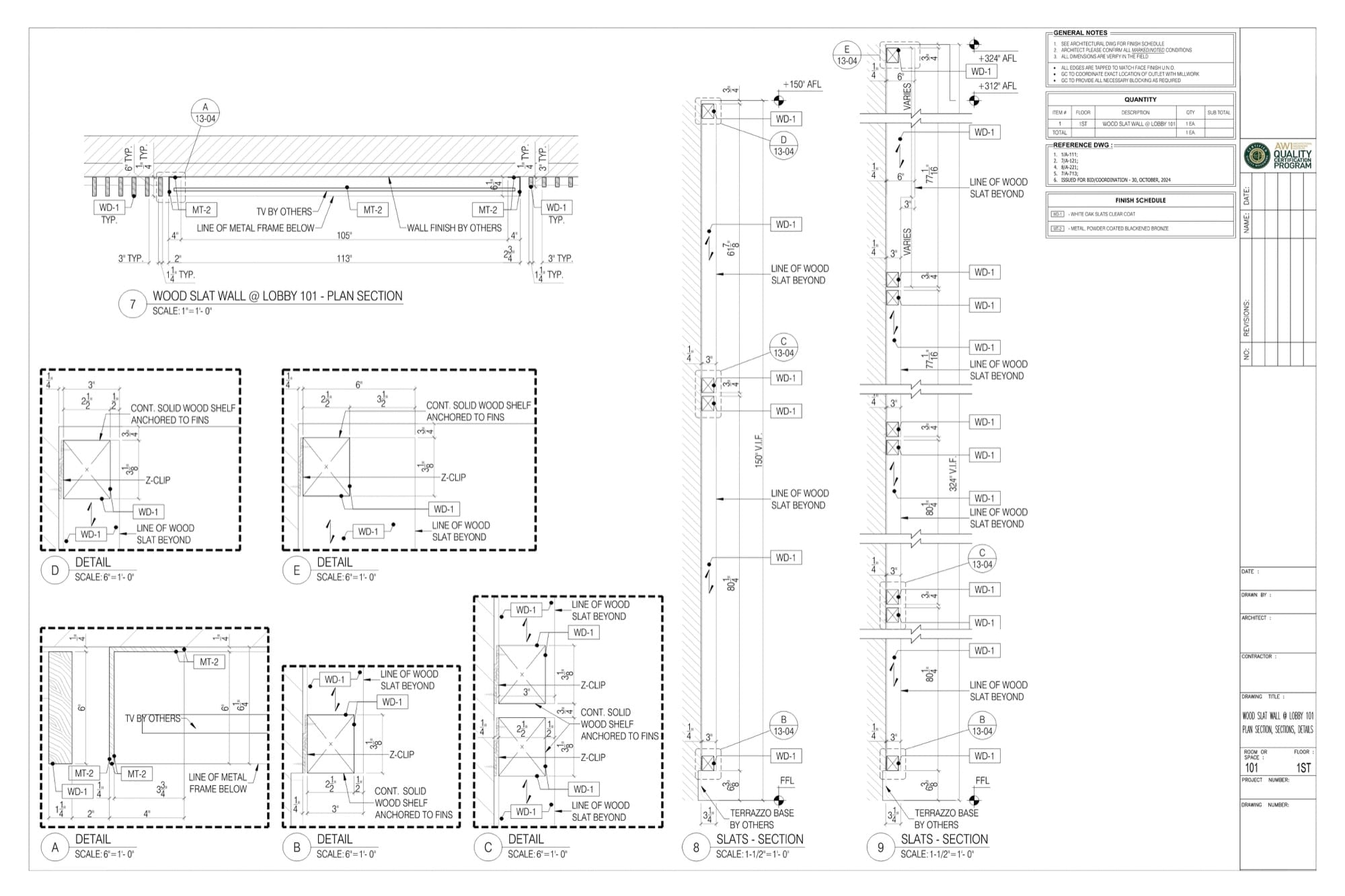
A package is more than sheets: a cover sheet, product data, samples and any deviations you declare.
What goes in the package
A submittal is rarely just drawings. A complete millwork package usually carries:
- A transmittal or cover sheet naming the project, the spec section, the item, the revision and the date
- The millwork drawings themselves, numbered and indexed
- Product data for anything bought rather than made: hinges, slides, pulls, edge banding, adhesives
- Samples where the spec calls for them, such as wood species, stain, laminate chips
- Certificates where required, for example fire rating or formaldehyde emission
- A list of deviations from the contract documents, written out rather than hidden in the drawings
That last item is the one shops most often skip, and it is the one that turns a small change into a dispute. If the set differs from the architect’s drawings anywhere, say so on the cover. A deviation declared is a conversation. A deviation discovered is a problem.
The stamps and what they oblige you to do
Review responses are not standardised across the industry, which is exactly why they cause trouble. These are the ones you will meet:
- No Exceptions Taken or Approved. Build it as drawn.
- Approved as Noted or Make Corrections Noted. Build it with the marked changes, no resubmission required. Read every mark before you accept this one, because a note can quietly change a material or a dimension.
- Revise and Resubmit. Correct and send it back. Fabrication does not start.
- Rejected. The submission does not meet the specification at all. Usually the wrong product or the wrong scope.
- For Record Only or Received. No review took place, and no approval should be inferred from it.
Two of those get treated as green lights when they are not. Approved as Noted carries obligations in the notes, and For Record Only carries none at all, though it looks reassuring in a file.
What the architect’s review does not cover
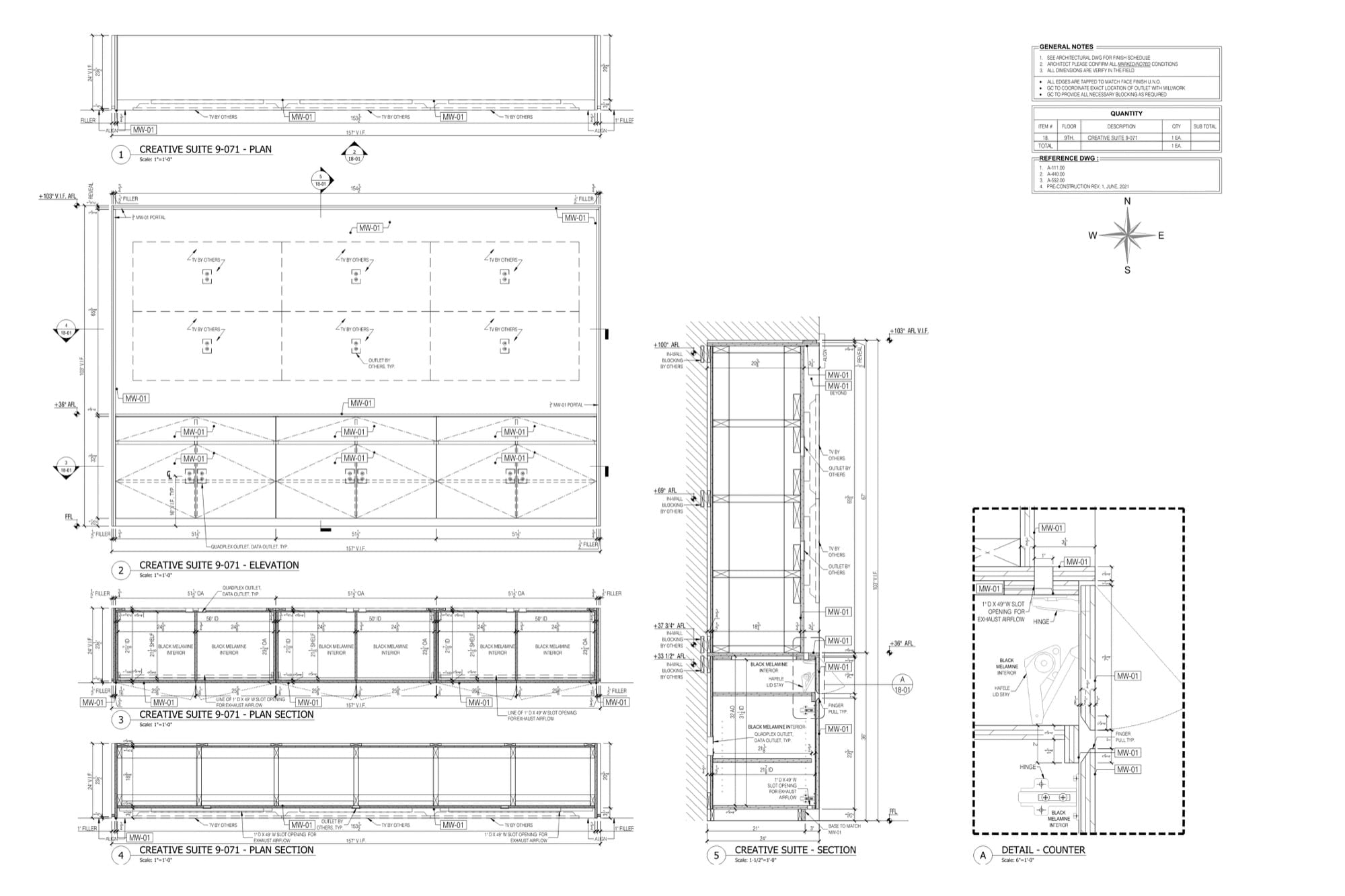
This is the part worth reading twice. The architect reviews for general conformance with the design intent shown in the contract documents. The review does not verify dimensions, quantities, fabrication methods or how the piece is assembled and installed. Those stay with the fabricator, and a stamp does not move them.
In practice that means a field dimension nobody took is the shop’s problem after approval, not the architect’s. It is also why declaring deviations matters: an approval on a set that quietly departed from the spec does not settle anything later.
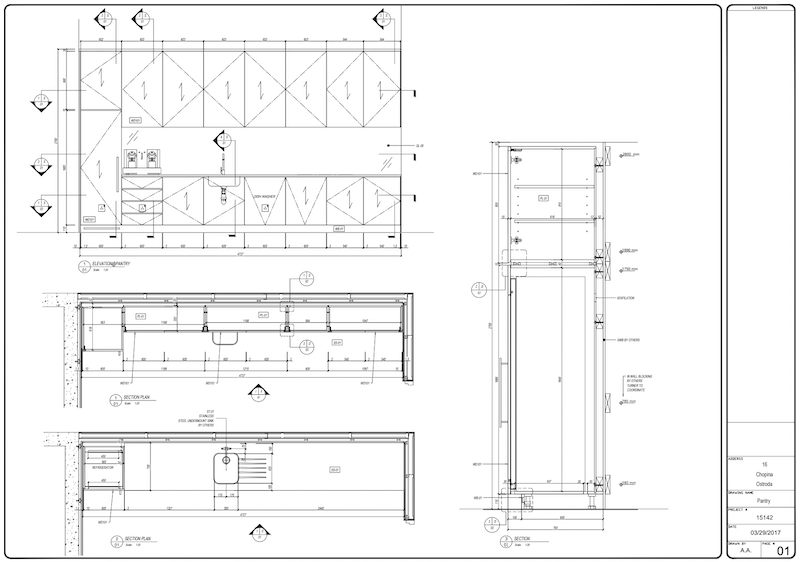
A stamp confirms the design intent. Field dimensions stay the fabricator’s problem.
Timing, long lead items and the submittal log
Most specifications give the design team a fixed review window, commonly ten to fifteen working days per submission. Add the general contractor’s own review and the return trip, and a single round is closer to three weeks. Two rounds and you have spent a month and a half before a panel is cut.
The way to survive that arithmetic is the submittal log: a list of every required submittal, who owns it, when it is due out and when it is due back, built at the start of the job rather than the middle. Long lead hardware and specialty veneers go to the top, because those are the ones that decide whether the schedule holds.
Why packages come back
Drawing content is only half of it. These process failures bounce packages that were technically fine:
- Submitted against the wrong specification section, so the reviewer cannot tell what is being answered
- Partial package, with drawings sent while the product data is still being chased
- No transmittal, so the revision cannot be identified six weeks later
- Deviations buried in the drawings instead of declared on the cover
- Resubmission with no revision clouds and no response to the previous comments
- Sent out of sequence, ahead of a related trade whose coordination the reviewer needs
Content failures are a separate list, and for casework we set them out in cabinet shop drawings.
How to shorten the loop
Three habits do most of the work. Answer every previous comment in writing, point by point, so the reviewer is not hunting for what changed. Cloud every revision and date it. And send complete packages even if that means waiting two days for the hardware data, because an incomplete submission does not start the clock, it wastes it.
Beyond that, the brief matters more than anything downstream. What to gather before drafting begins is listed in our millwork drafting brief.
Wonder how much high-quality drafting services cost? Check out the examples of our real projects with pricing.

Shop drawing submittal FAQ
What is the difference between a shop drawing and a submittal?
The shop drawing is the document showing how a piece will be built. The submittal is the formal handover of that drawing, plus product data, samples and certificates, to the design team for review before fabrication starts.
What does approved as noted mean?
Build it with the marked corrections, without sending it back for another round. Read every mark first, because a note can change a material or a dimension while the stamp still reads as approval.
How long does shop drawing review take?
Specifications commonly allow the design team ten to fifteen working days. With the general contractor’s own review and the return trip, a single round runs closer to three weeks.
Does an approved submittal make the architect responsible for the drawings?
No. The review covers general conformance with the design intent. Dimensions, quantities, fabrication methods and installation stay with the fabricator, and a stamp does not move them.
What should be included in a shop drawing submittal package?
A transmittal naming the project, spec section, item and revision, the indexed drawings, product data for bought items, any samples and certificates the spec requires, and a written list of deviations from the contract documents.

Nathalie Paul
Blog Writer
Nathalie is a senior draftswoman at ArchiCGI. She loves the fine art of creating quality drawings. After work, Nathalie is passionate about Ishvara yoga, traveling, and strong bitter coffee.
Leave a Reply
Want to join the discussion?Feel free to contribute!