Drafting Services Blog
Find out how to improve your business with professional CAD drawings and Revit 3D modeling

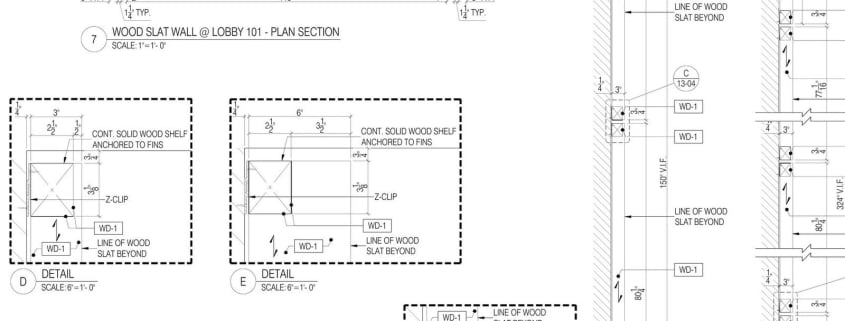
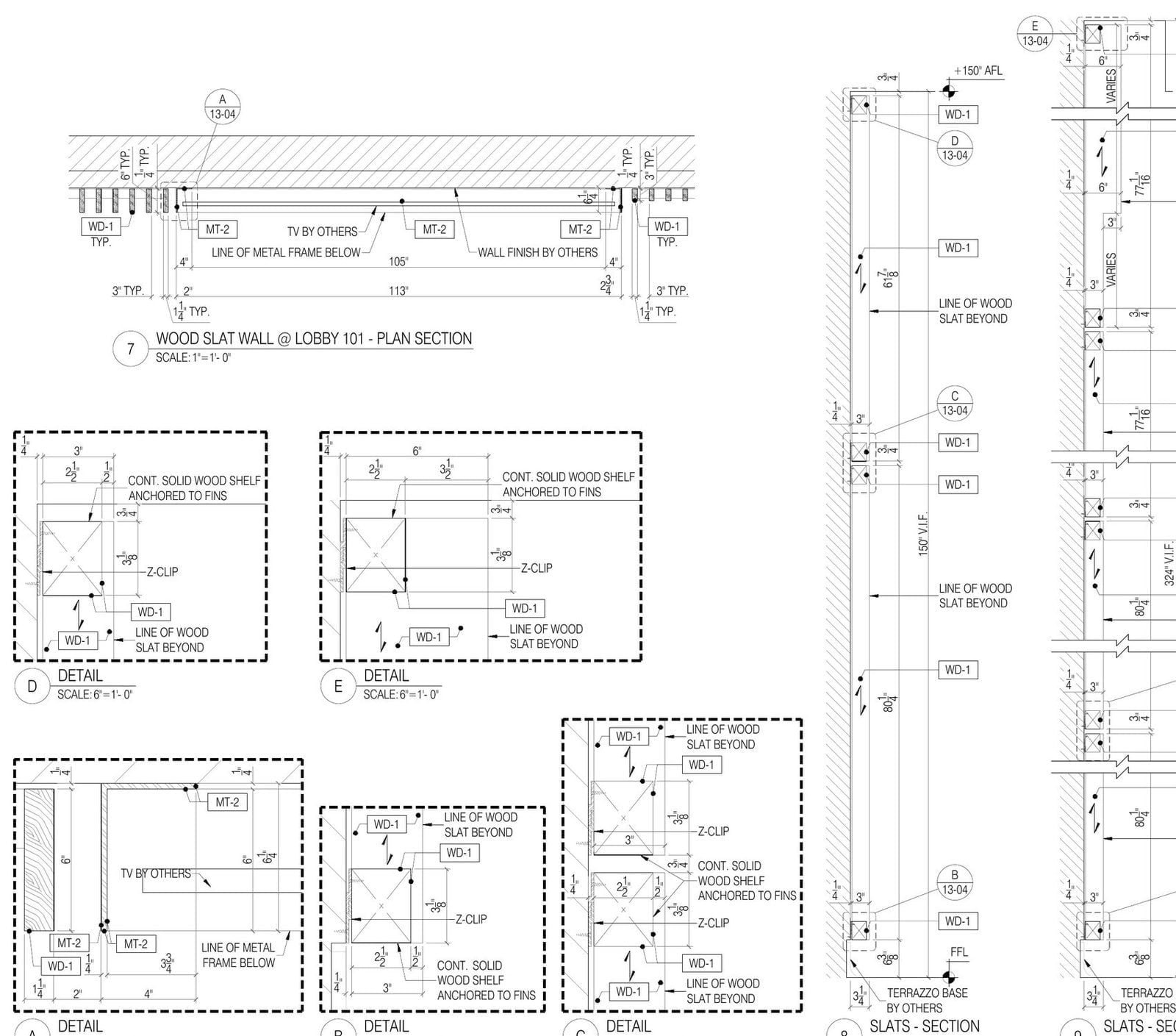
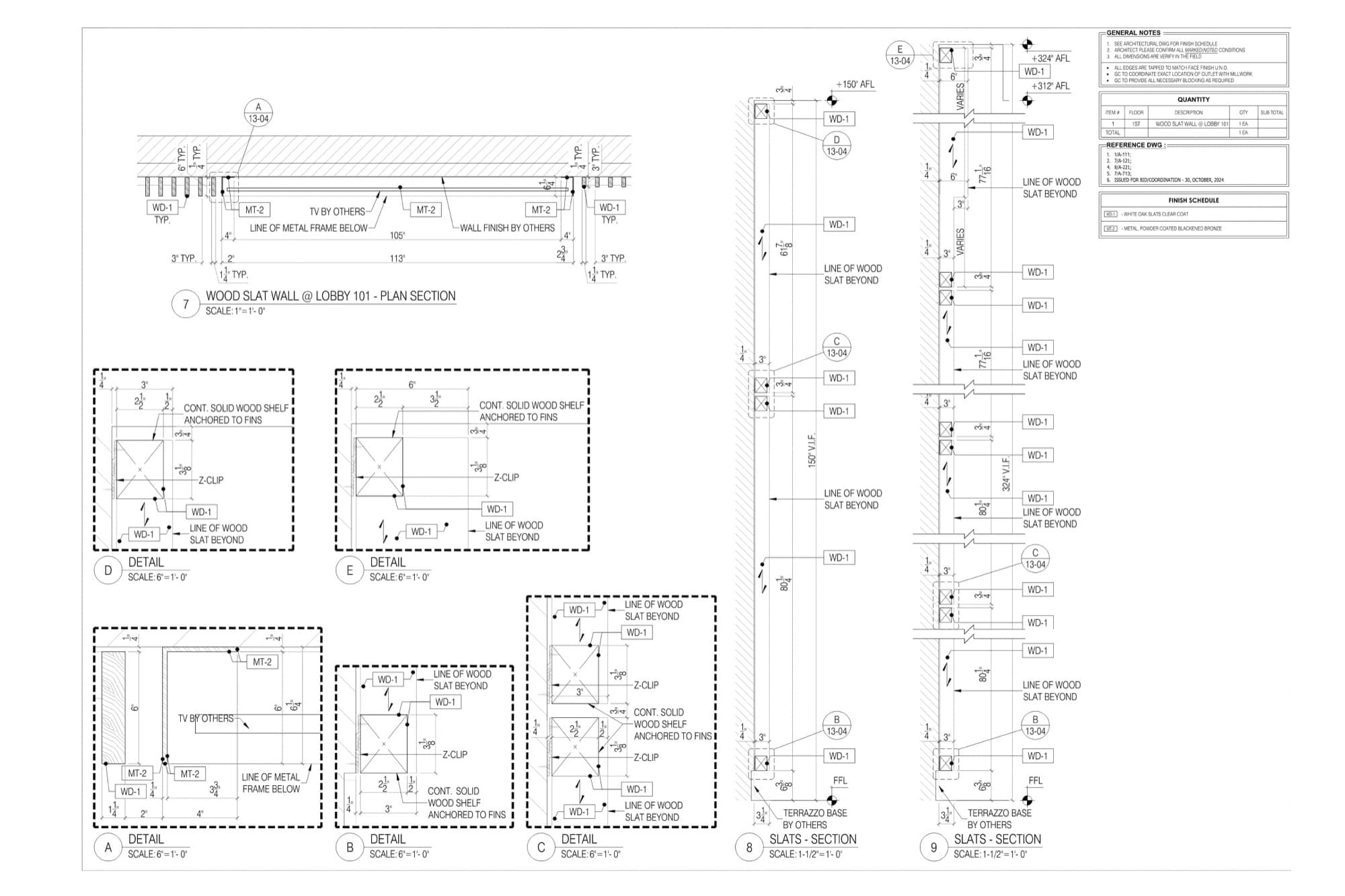
Z-clips, anchoring to fins, and half the surrounding work marked by others. This is what an installer reads.
A shop builds to millimetres. A building is not built to millimetres. The drawing is where those two facts get reconciled, and if it does not happen on paper it happens on site with a saw.
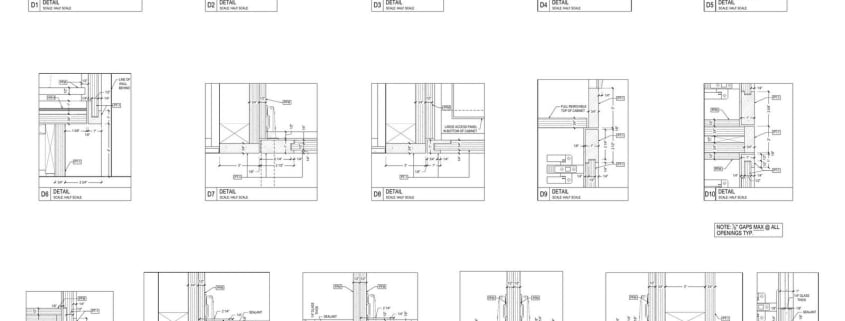
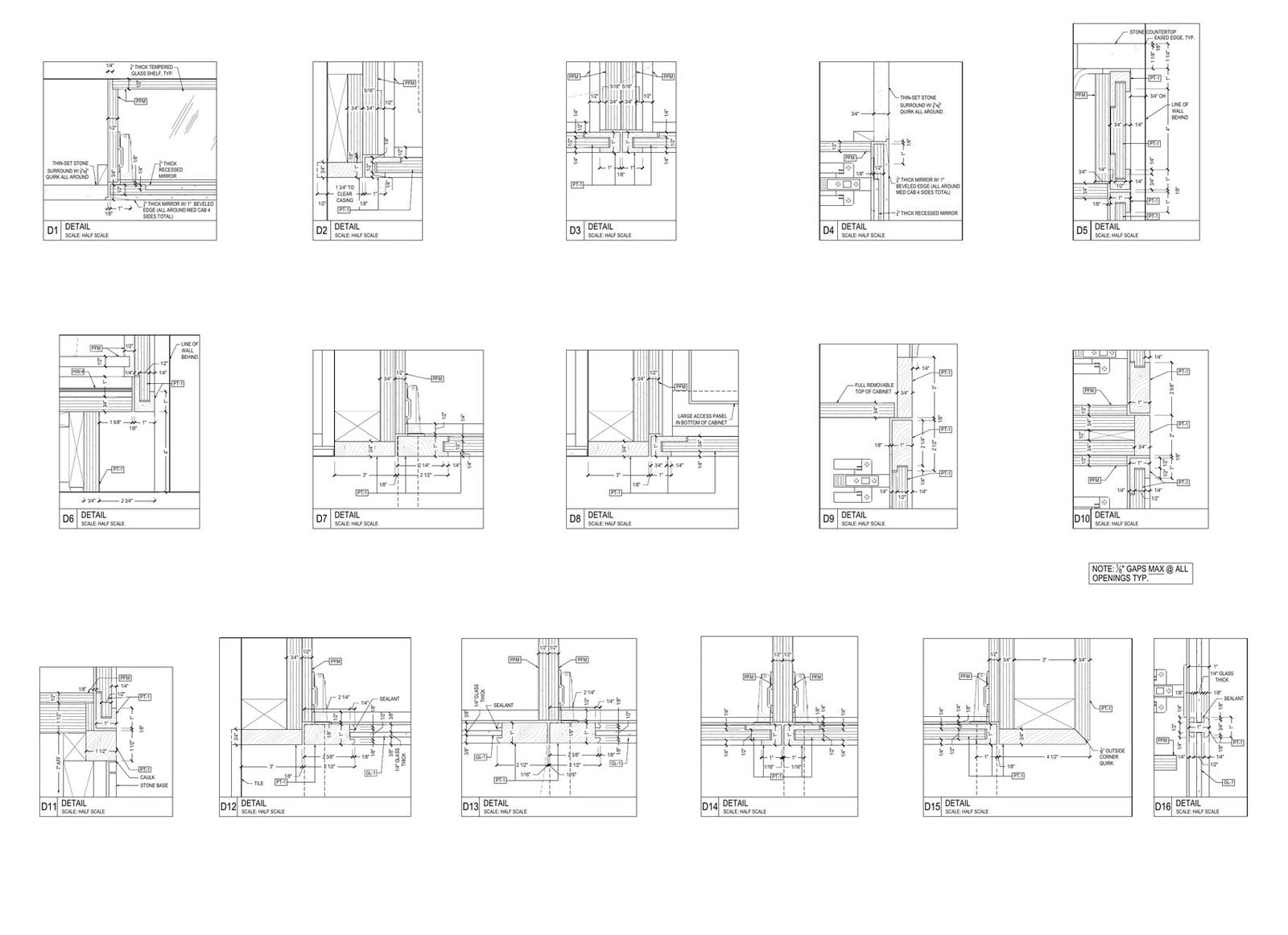
Sixteen details from one job. Bottom right: the note that settles a hundred arguments later, 1/8 inch maximum at all openings.
Hardware looks like a detail you sort out at the end. It is not. Pick a different hinge and the door size changes. Pick undermount slides instead of side mount and the box gets narrower. Decide on inset doors after the elevations are drawn and every opening on the sheet is wrong.
That is why hardware sits early in a millwork set, and why it lives in two places at once: a schedule that names the products, and details that show what those products do to the geometry.
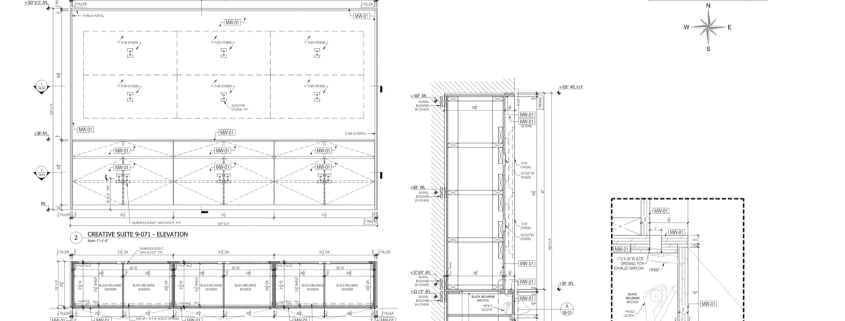
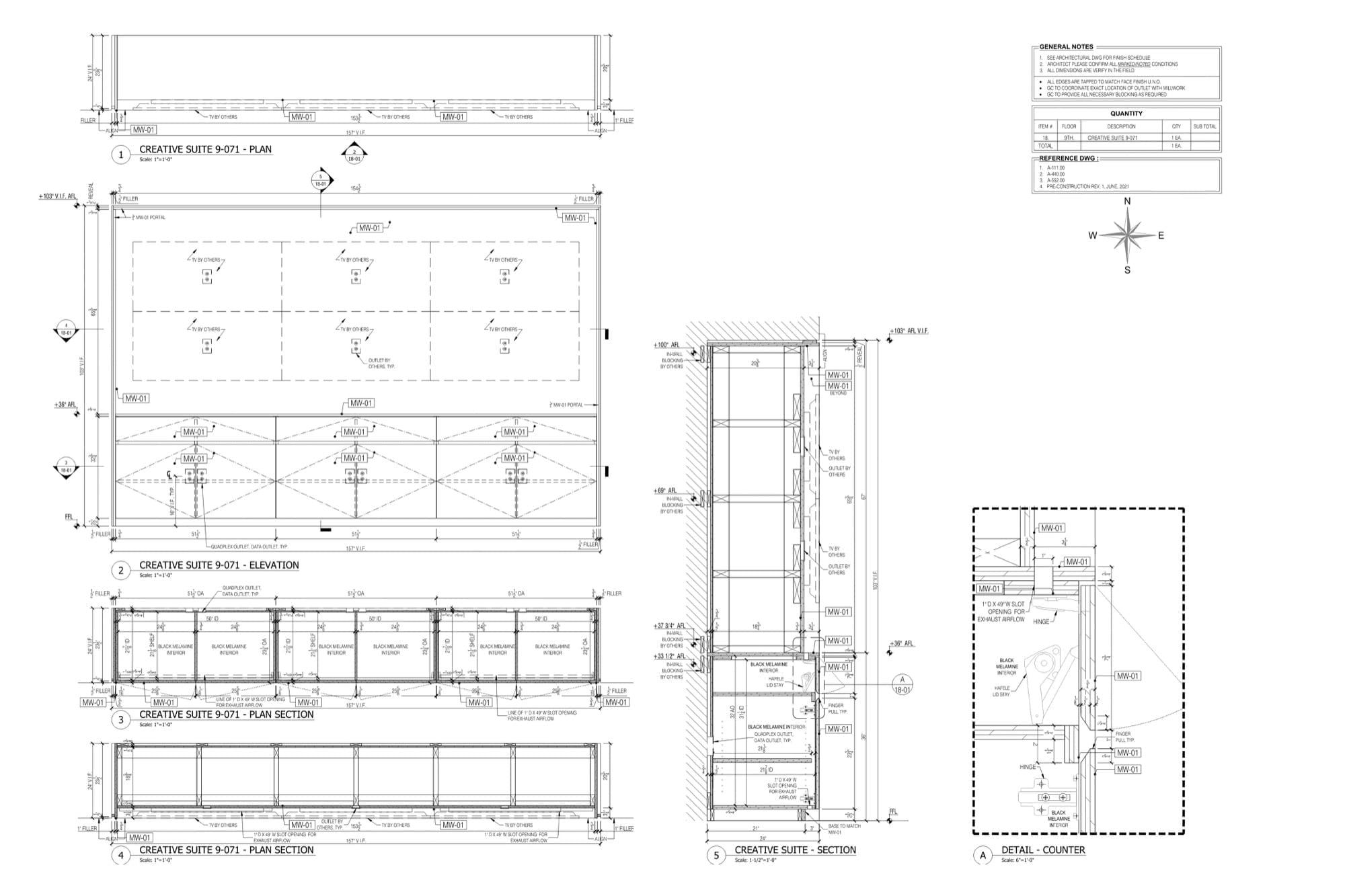
A shop drawing: everything a reviewer needs to judge intent and fit, and nothing a saw operator needs.
Shop drawings exist to get approval. Fabrication drawings exist to get something built. Same project, same cabinet, two different audiences, and the confusion between them costs real money on site.
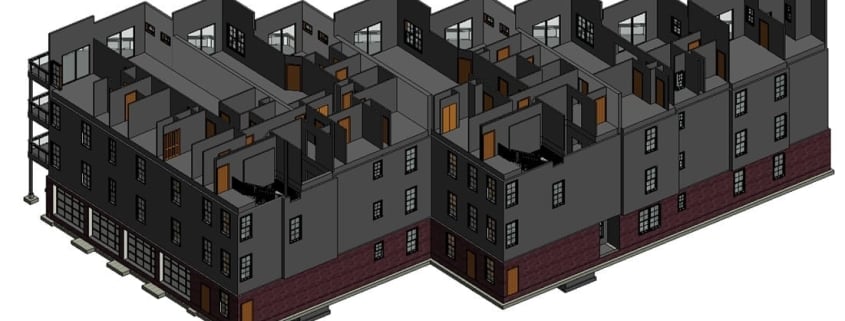
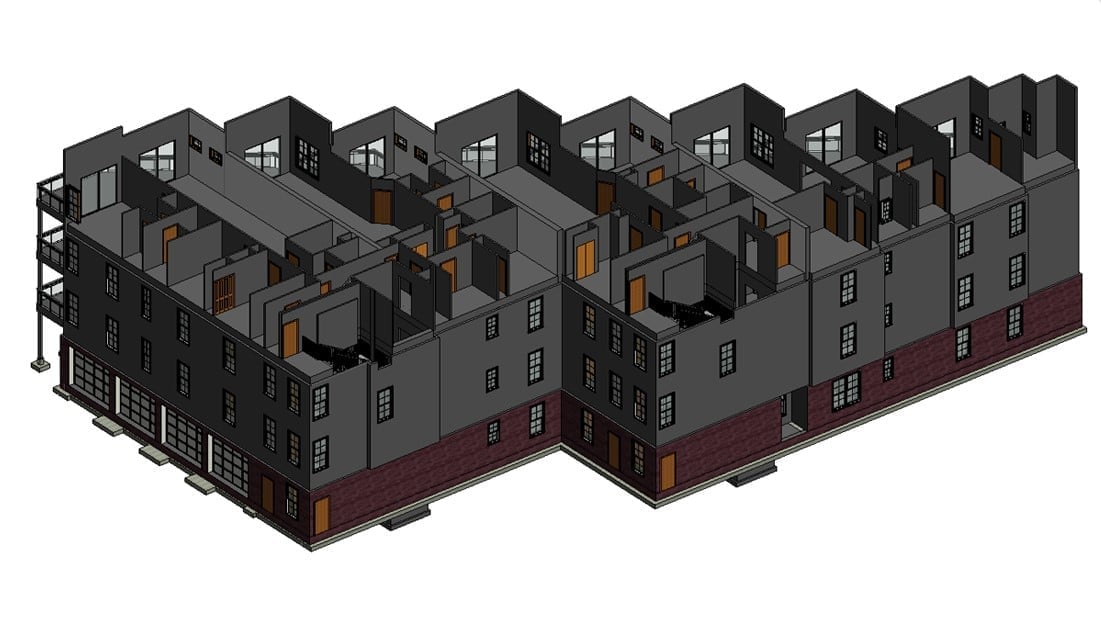
The output of a CAD to BIM job: the same building the DWGs described, rebuilt as objects that know what they are.
CAD to BIM means taking a set of 2D drawings and rebuilding the project as a model where every wall knows it is a wall. Not tracing lines in Revit. Rebuilding.
That distinction is the whole job. In DWG a wall is two parallel lines and a hatch. Move one line and nothing else reacts. In a model the wall is an object with a type, a thickness, a fire rating and a host of things attached to it. Move it and the plan, the elevations, the sections and the schedules all catch up on their own.
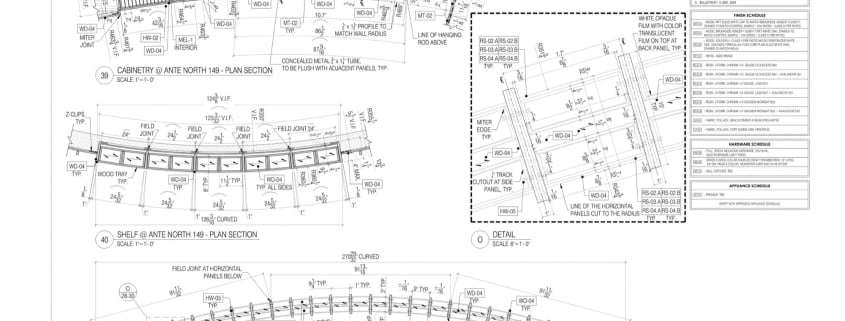
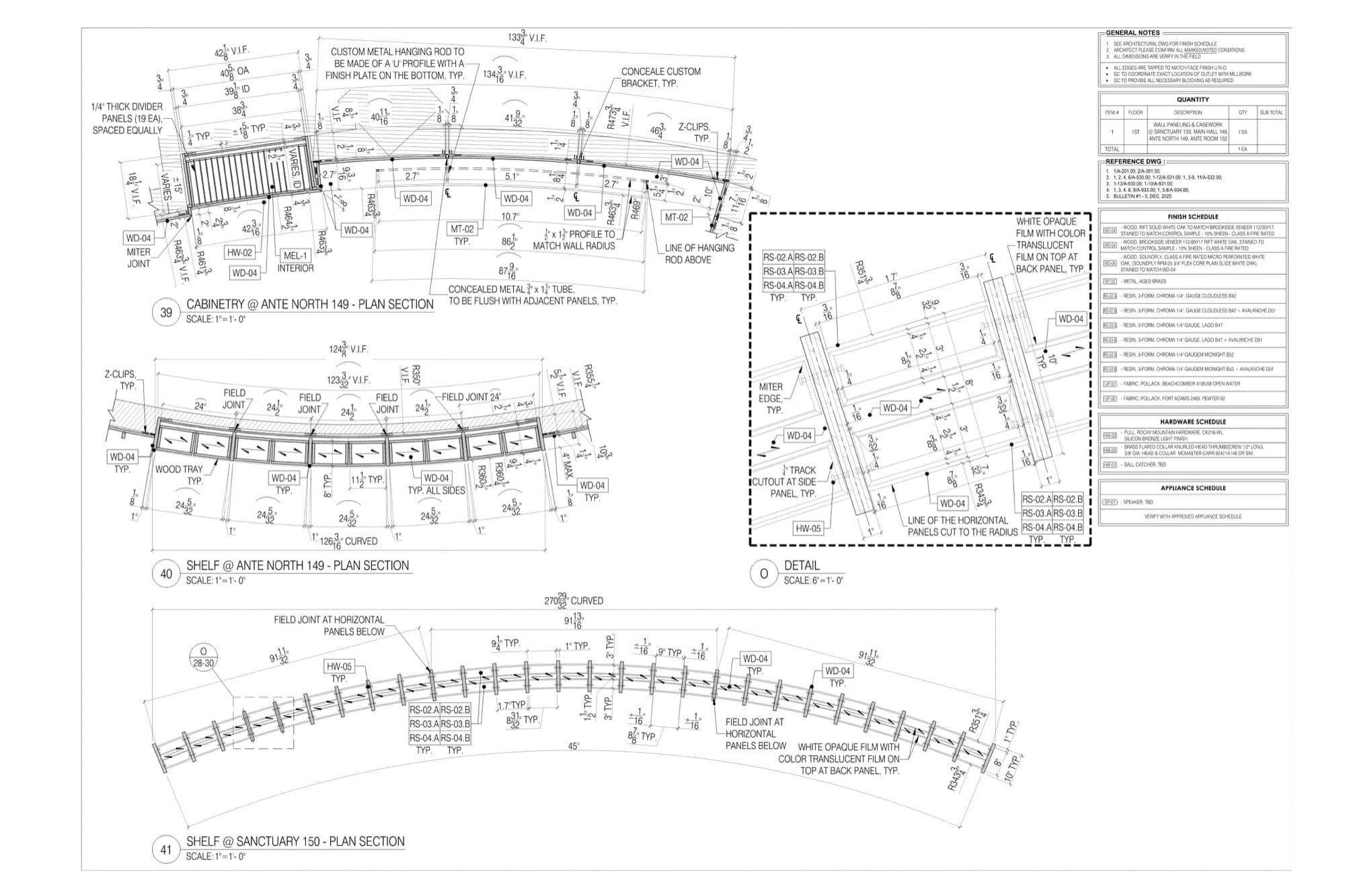
A millwork sheet carries the spec with it: finish schedule, hardware schedule and general notes sit on the same page as the drawing.
Millwork sits in Division 06, Wood, Plastics, and Composites, and almost always under section 06 40 00, Architectural Woodwork. If the cabinets arrive from a catalogue instead of a shop, the same items move to Division 12, Furnishings. That one distinction decides who draws the shop drawings, who signs off on the grade, and which trade carries the money in the estimate.
Below is what each division holds, how to tell in ten seconds which one a scope falls under, and what a drafter pulls out of the spec before the first sheet gets drawn.
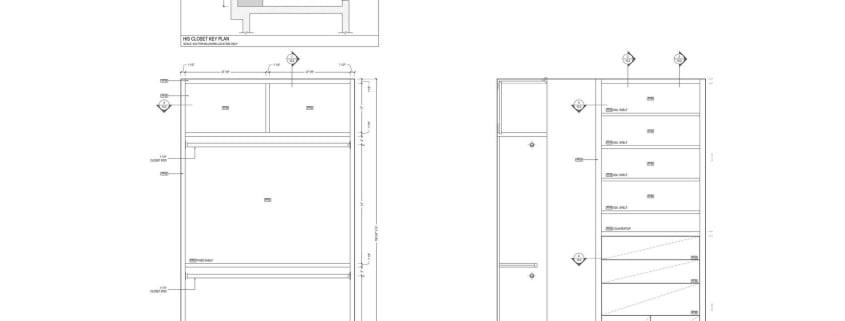
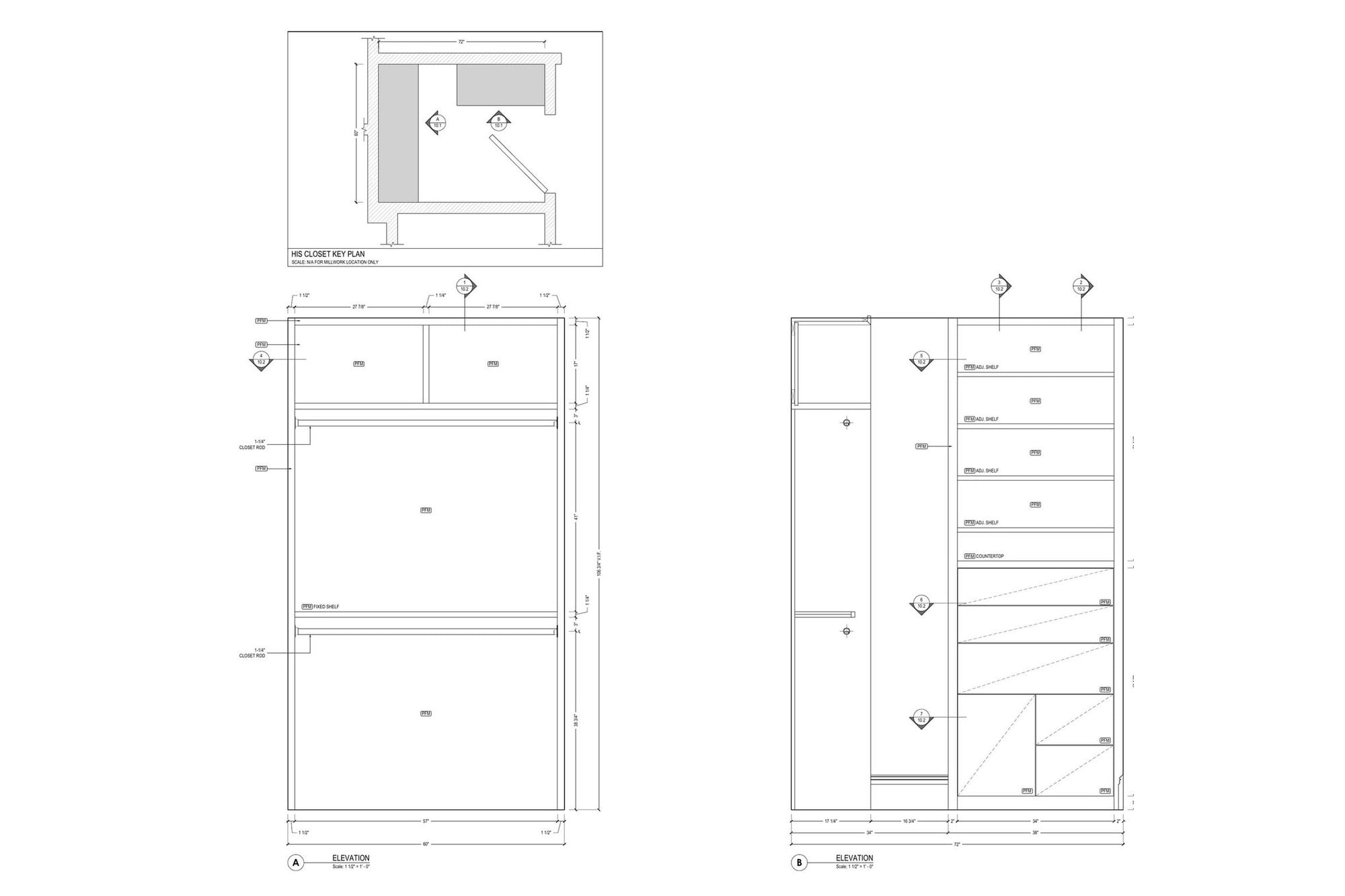
The key plan fixes which wall is which. Without it two elevations meet in a corner and fight over the same inches.
A closet looks like the simplest thing in a millwork package. It is a box with a rod in it. Then the shop asks how high the countertop sits, whether the rod is one and a quarter or one and three eighths, and what happens where the run meets the return wall. Those answers live on the shop drawings, and if they are not there the shop guesses.
We draw closets every week as part of millwork shop drawing services, so what follows is what actually goes on the sheets, using pages from real packages.
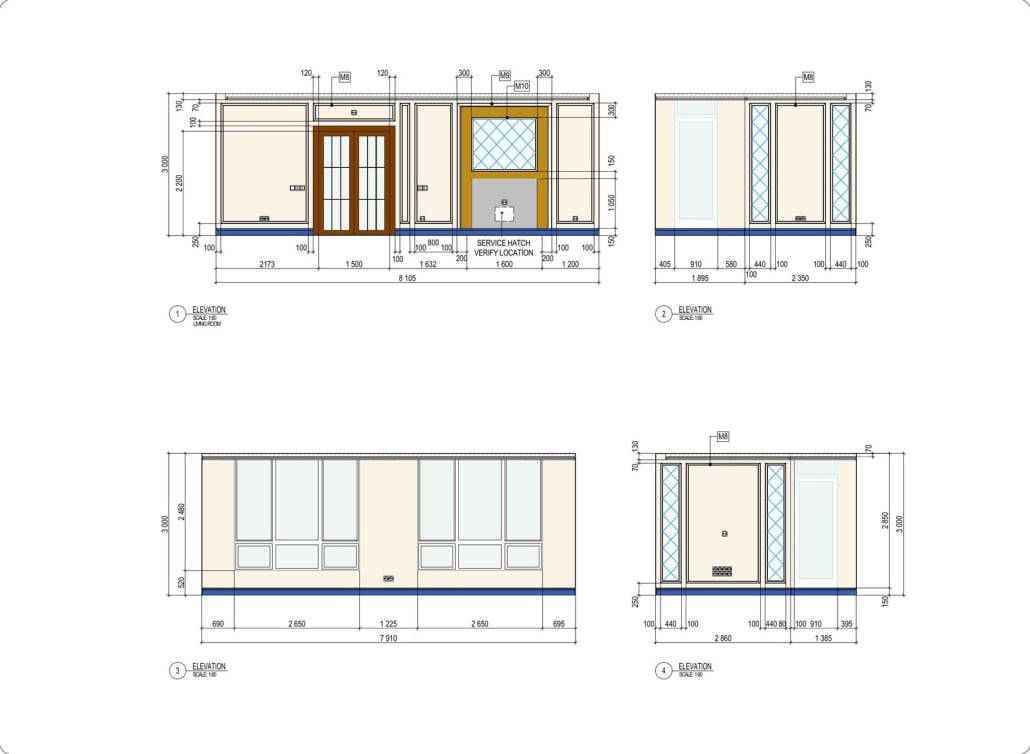
An elevation drawing shows one face of a building, or one wall of a room, straight on and flat. Nothing shrinks into the distance the way it would in a perspective, which is exactly why you can lay a scale rule on the sheet and read a height straight off it. A plan answers where. An elevation answers how high, and what the face looks like to someone standing in front of it.
The set is finished. Before anything gets cut, it makes one round trip for a stamp.
The drawings are finished. Nothing gets cut yet. First the set travels to the general contractor, then to the architect, and comes back with a stamp on it. That trip is the submittal, and on a commercial job it decides your schedule more often than the drafting does.
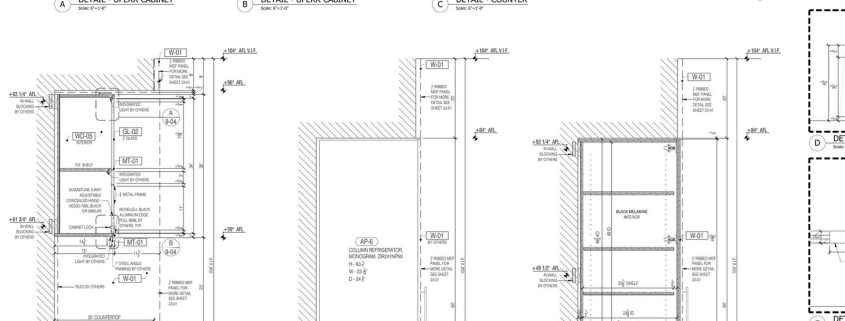
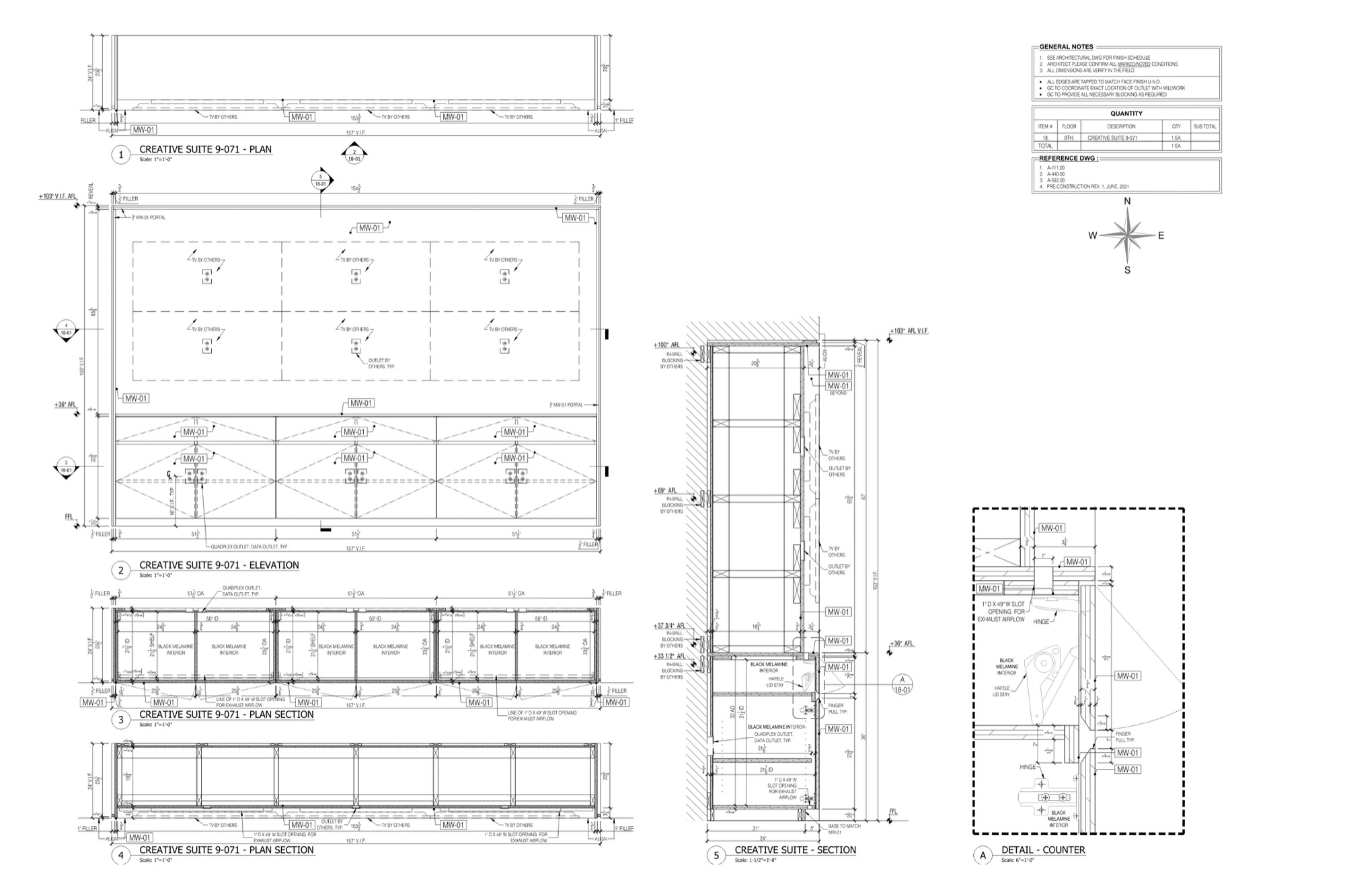
Ask a cabinet shop what slows production down and the answer is rarely the CNC. It is the drawing package. A designer’s pretty elevation with no sections, a plan that pretends the wall is straight, a hardware note that says soft close hinges and nothing else. Cabinet shop drawings exist to remove that guesswork before a single panel gets cut. Below is what a proper cabinet set includes, how face frame and frameless construction change the sheets, and one real drawing from our team with the details a shop actually reads.
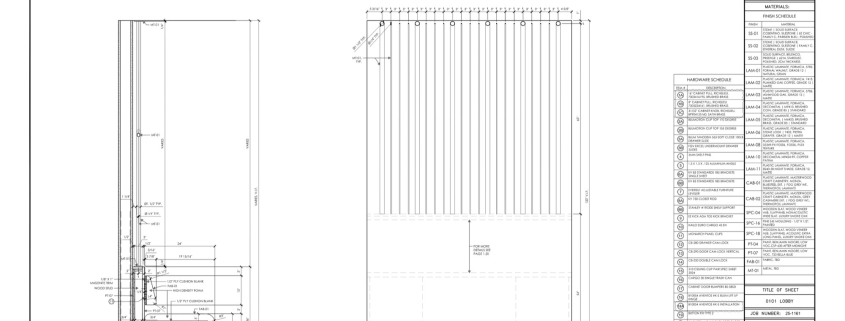
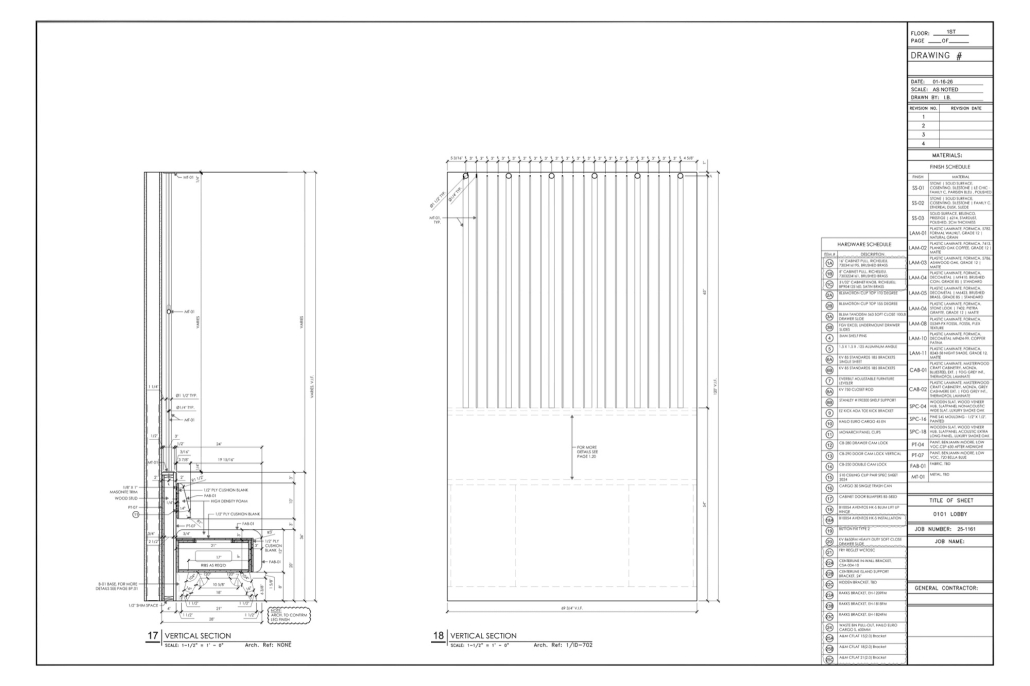
A plan tells you where things sit. An elevation drawing tells you what a face looks like from straight on. Neither one tells you how thick that wall is, what holds the shelf up, or whether the waste pipe behind the vanity is going to collide with the drawer box. That is the job of a section.