
INTERIOR DESIGN DRAWINGS LIST: 11 KEY TYPES OF PROJECT DRAFTS
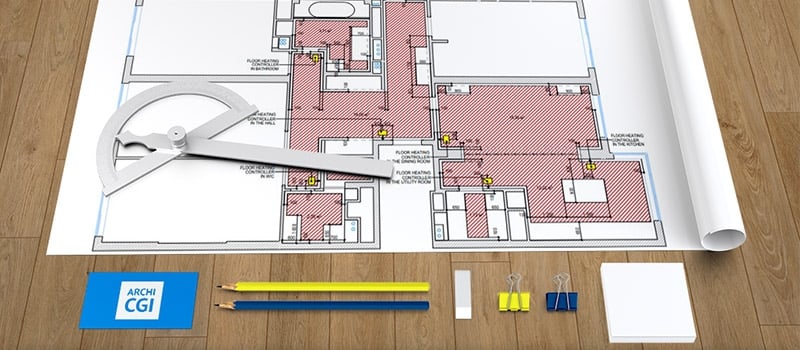
Drafting services are a crucial tool for an interior designer. Detailed technical plans are not only the basis for any renovation but also highly useful guides for contractors implementing design solutions. That’s why our CAD studio prepared an interior design drawings list with all the necessary types of drafts for successful project completion.
High-quality CAD interior architectural drawing services can help solve all the designers’ problems. Professional draftsperson can create drafts from scratch or update old schemes to new, digital versions. Read on to learn what types of interior drawings are there and how they can help with design projects. Worth clearing up one thing before the list starts: there is a real difference between interior drafting and design, and mixing the two is where a lot of project confusion begins.
Contents:
- #1. Floor plans
- #2. Furniture layout
- #3. Elevations
- #4. Lighting plans
- #5. Electricity schedules
- #6. Plumbing schemes
- #7. Reflected ceiling plans
- #8. Floor covering drafts
- #9. Site plans
- #10. Mounting and dismantling layouts
- #11. AC and heating layouts
- What the whole set is called
- Interior Design Drawings FAQ
#1. Floor Plans
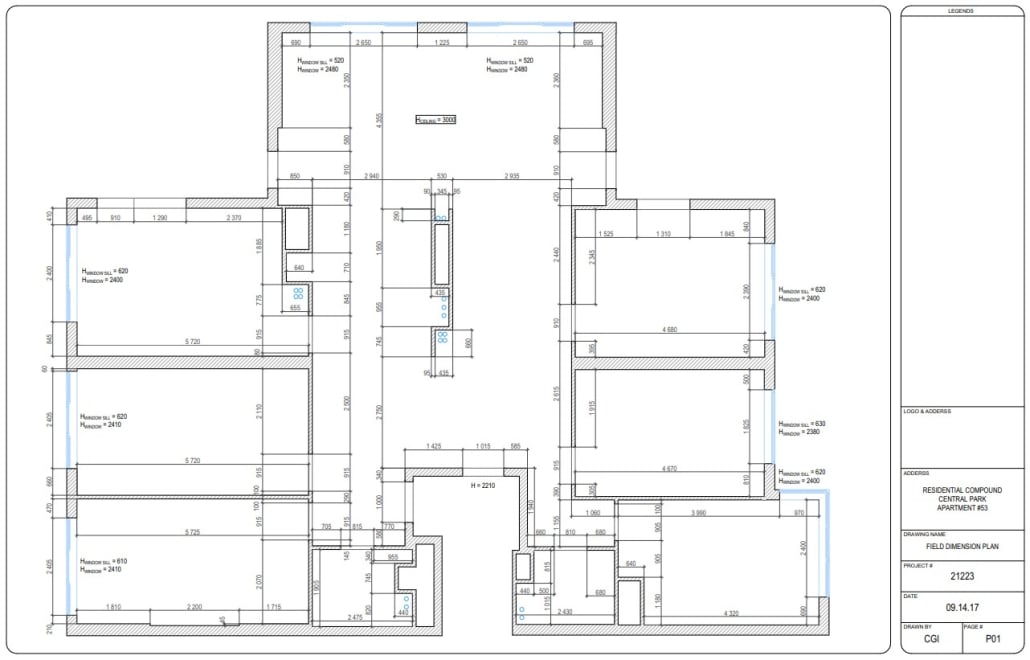
The first entry on our interior design drawings list is by far the most significant draft type. Floor plans are the foundation of interior drafting services. Essentially, they show the general layout of a property, looking from above. These drawings accurately list the spatial relations between rooms, walls, doors, windows, and other architectural elements. This way, floor plans allow one to visualize how people move through the space. They make it easier to check if the interior is suitable for the intended goal, whether a commercial or residential space.
The floor plan is the sheet everything else hangs off, so it is worth seeing what a full floor plan package covers before the rest of the set is drawn.
#2. Furniture Layout
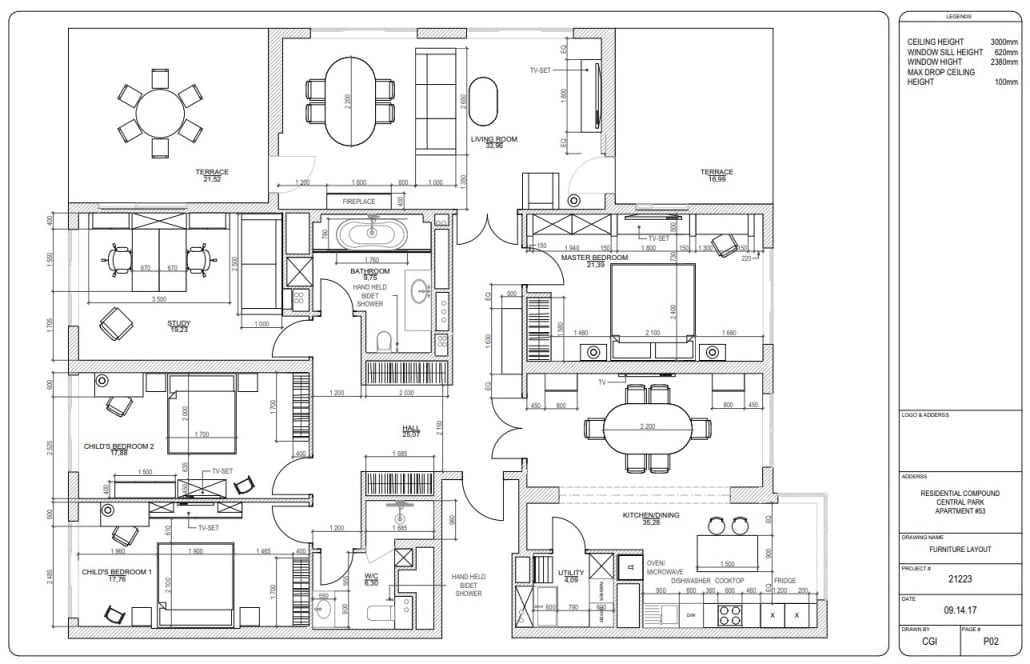
It’s no secret that an interior design can’t be complete without a detailed furniture layout. These drawings are essential to understanding the spaciousness of each room. Basically, they show a top view of the furniture within the interior and list its precise locations and sizes. As a result, these drafts can help designers make the best use of the area. So, their clients can easily visualize the organization of the space. On top of that, they can also select specific furniture and appliance models according to the dimensions of the spaces. Those layouts do a second job later. Once a property goes on the market, house plans for a real estate listing read far better with the furniture drawn in.
#3. Elevations
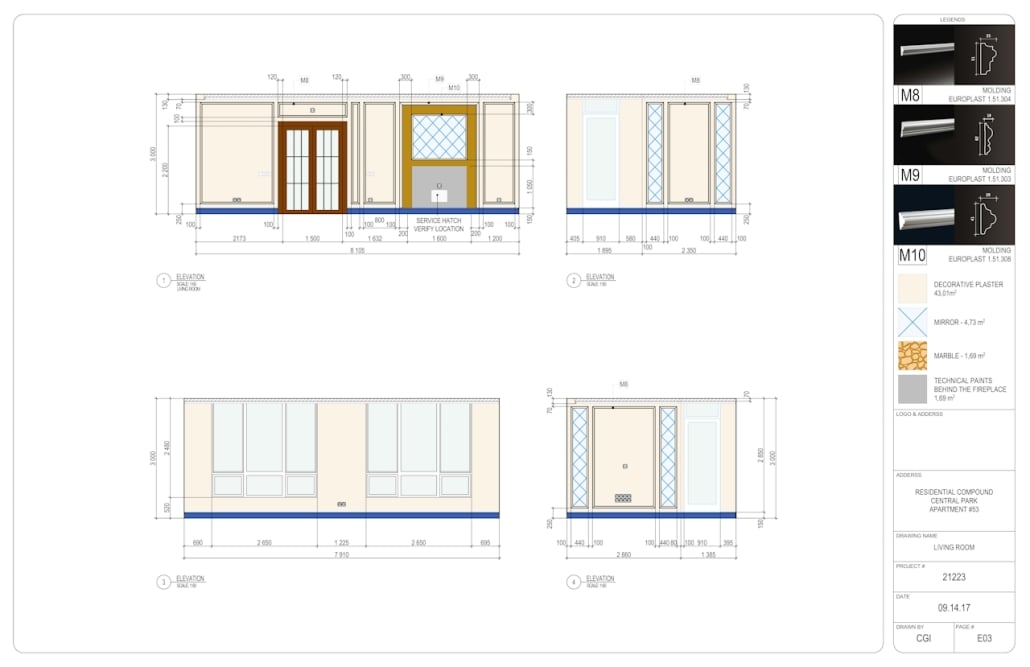
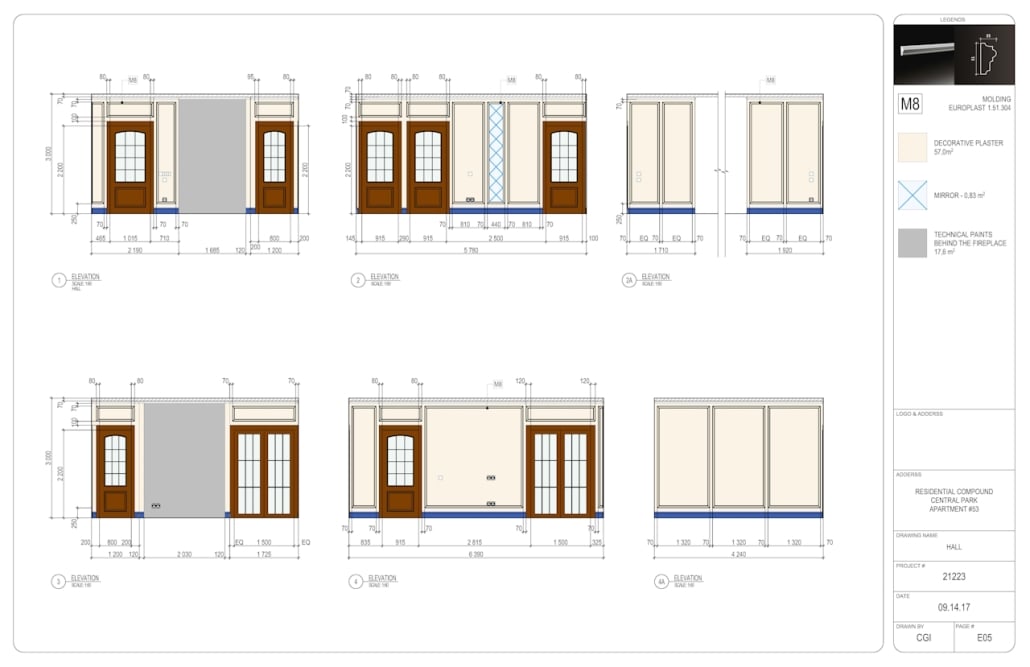
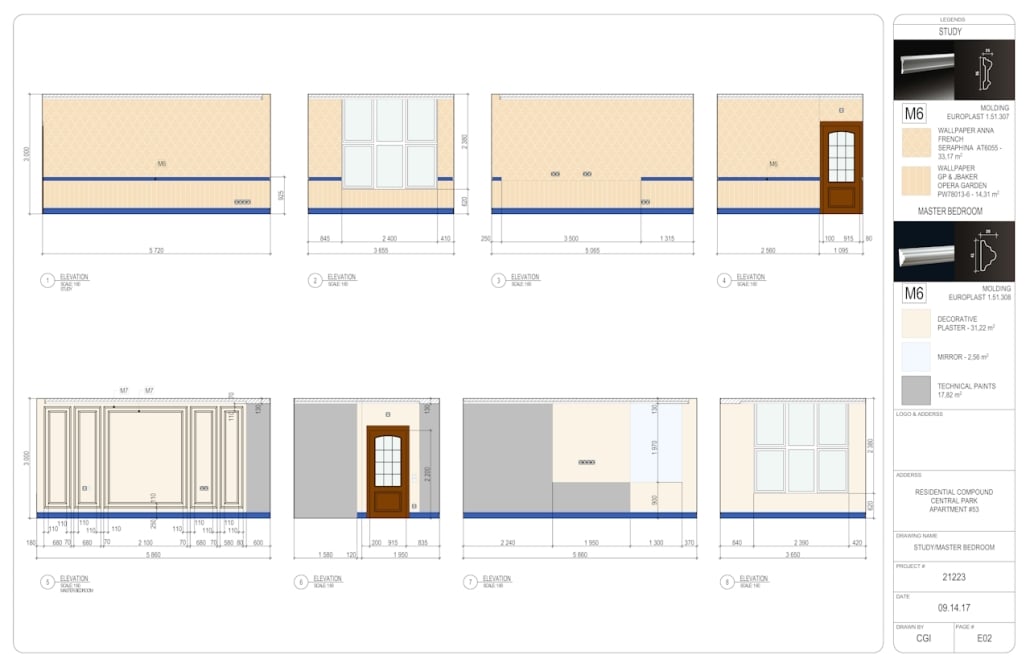
Comprehensive residential projects usually need a higher level of interior design detail. Elevations are one of the five types of residential architectural drawings that a house project rarely does without. That’s why the planning phases often include elevation drawings. They can help determine where to place objects and other elements within a space. In turn, it will allow stakeholders and clients to visualize a building design or a house plan as a whole.
Elevations are usually scaled drawings. They present a layout of a room on a vertical plane , giving a viewer a more accurate idea of where and how things will fit together. While a floor plan provides a general overview of the space, an elevation offers a look inside the room from eye level. Thus, such draftings are indispensable for creating a kitchen design or any other renovation.
#4. Lighting Plans
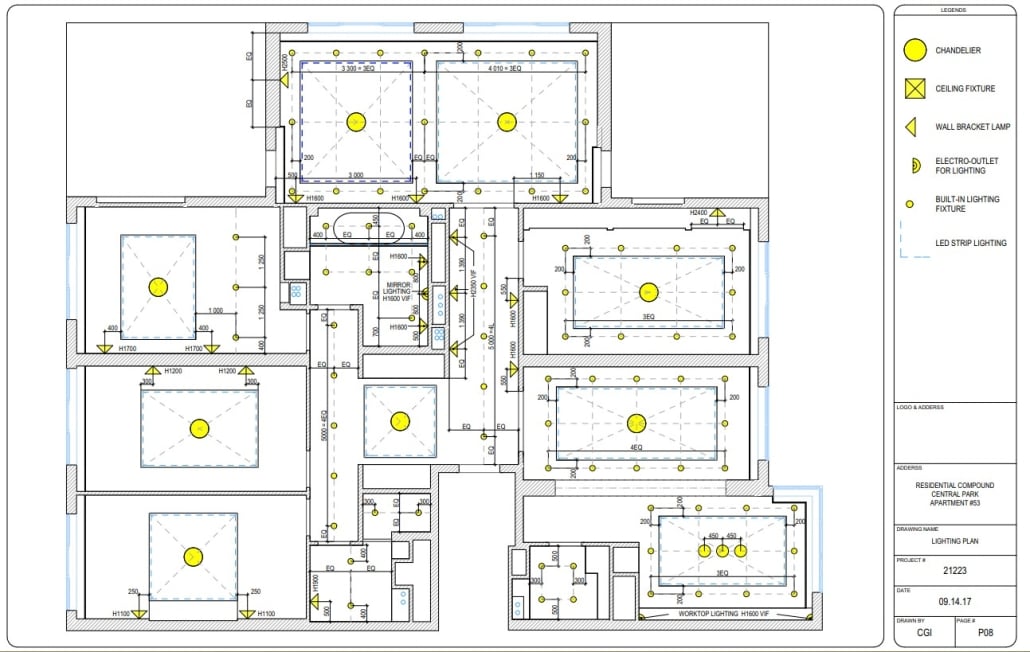
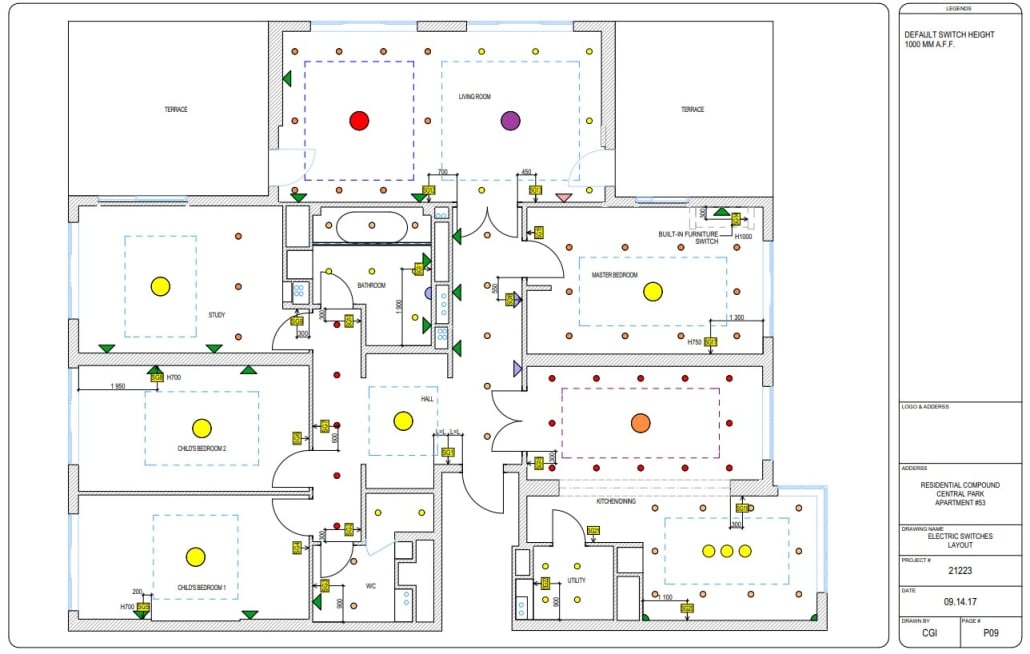
A well-thought-out lighting system can transform any place significantly. That’s why lighting layouts are the next valuable element on our interior design drawings list. Such drafts refer to the placement of every light source in the space. They can aid designers in understanding if there is enough lighting for the needs and requirements of their clients. Also, based on these CAD drawings, a specialist can easily identify energy consumption, financial, and environmental impact. Hence, lighting plans ensure a well-functioning illumination system.
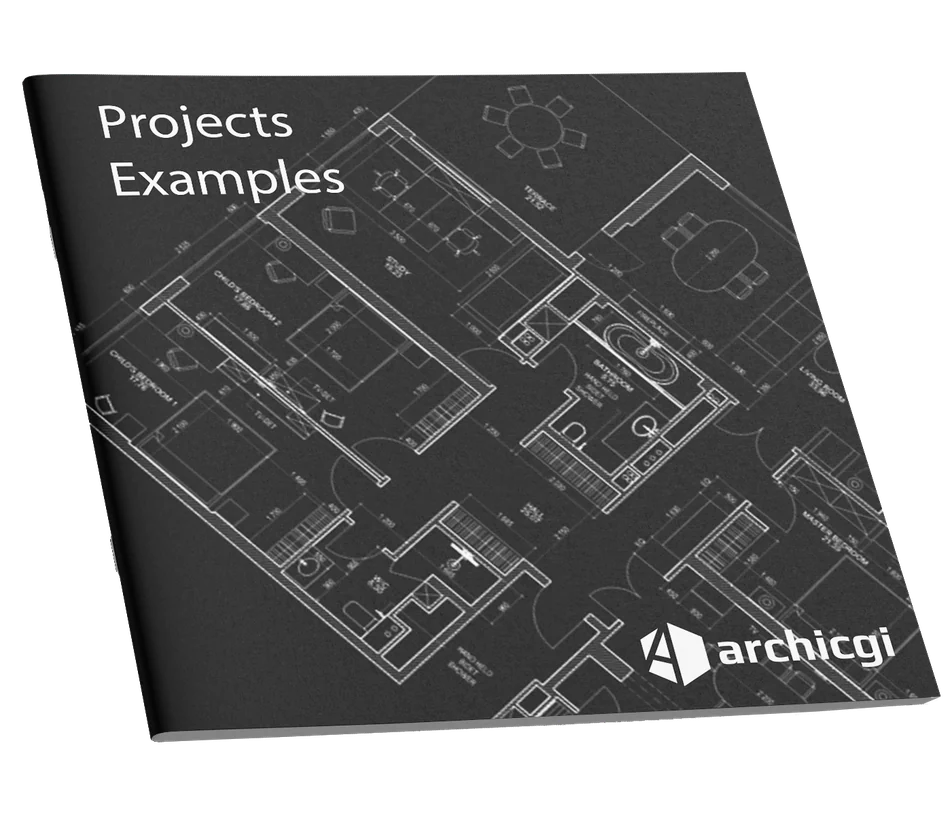
Want to know more about CAD services our studio provides? Check out this archive with projects examples and learn more.
#5. Electricity Schedules
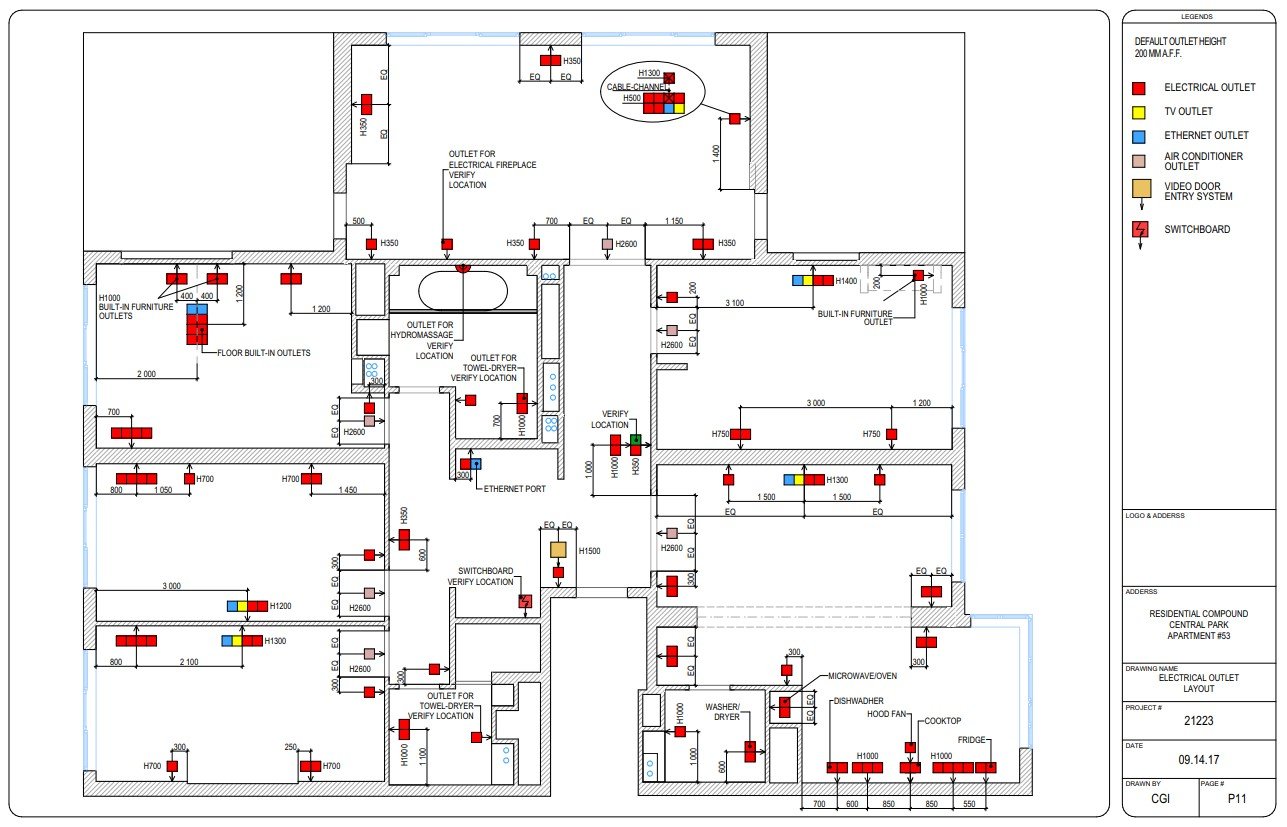
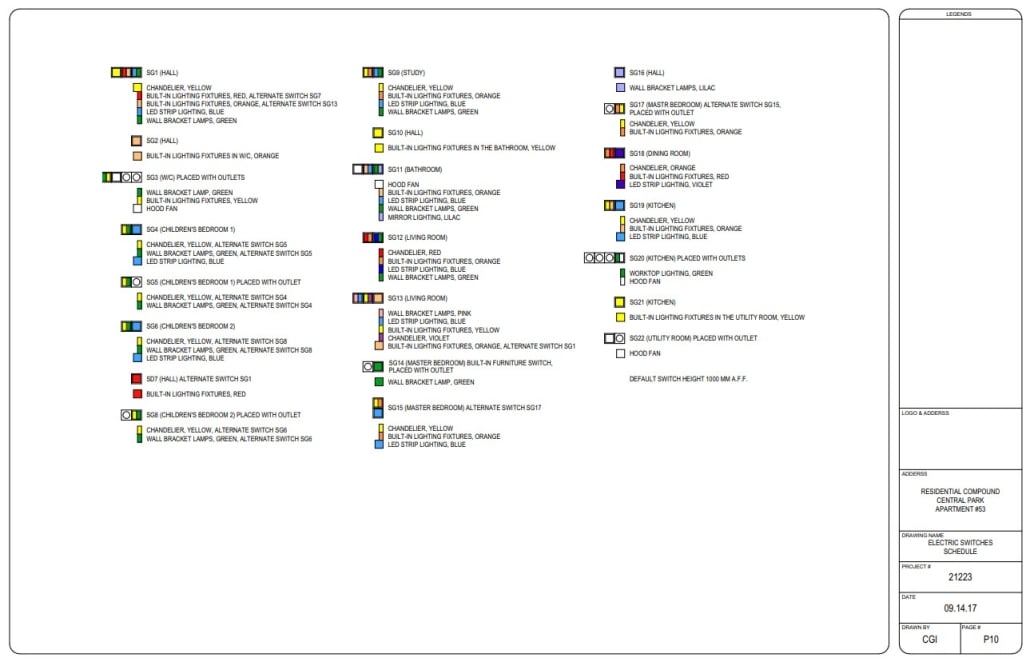
Electrical layout draftings take the fifth position on our interior design drawings list. Such interior design drawings, also known as wiring diagrams, are basically visual descriptions of the building’s circuitry, sockets, cables, and power supplies. The main goal of electrical layout design is to create a system that runs smoothly. These plans determine the accurate power distribution. This, in turn, ensures the proper operation of electrical components and devices. Electrical layouts allow contractors to guarantee that they design the system in compliance with local building regulations and standards.
#6. Plumbing Schemes
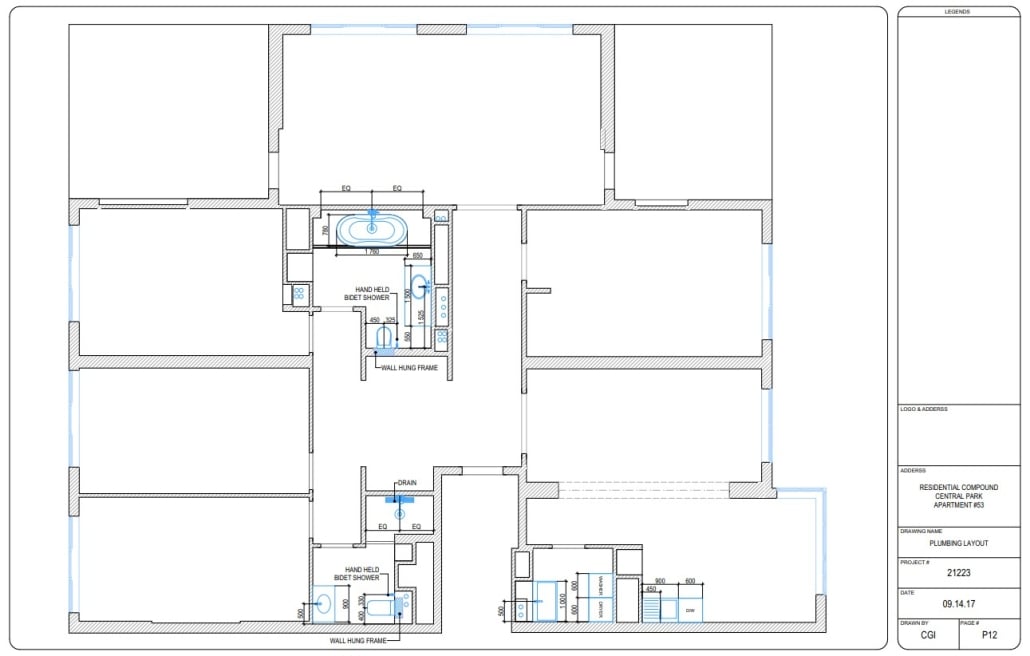
Our next entry on the interior design drawings list is absolutely necessary for any building project involving water supply, drainage, or heating systems. Plumbing layouts are schematic representations of the plumbing systems within homes. It includes the locations, sizes, and connections of water supply lines, drains, vent pipes, valves, and fixtures. An appropriately designed plumbing scheme ensures efficient water supply and waste removal. As a result, it can reduce the risks of leaks and blockages and prevent issues like backflow and cross-contamination. Finally, such interior design drawings help project stakeholders meet local regulations and codes.
#7. Reflected Ceiling Plans
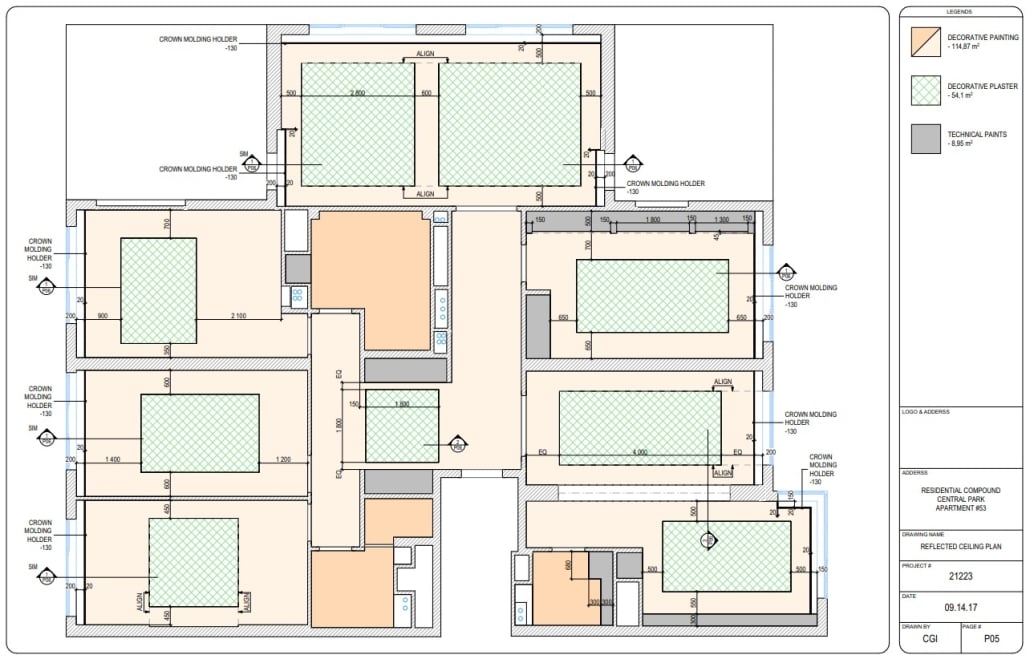
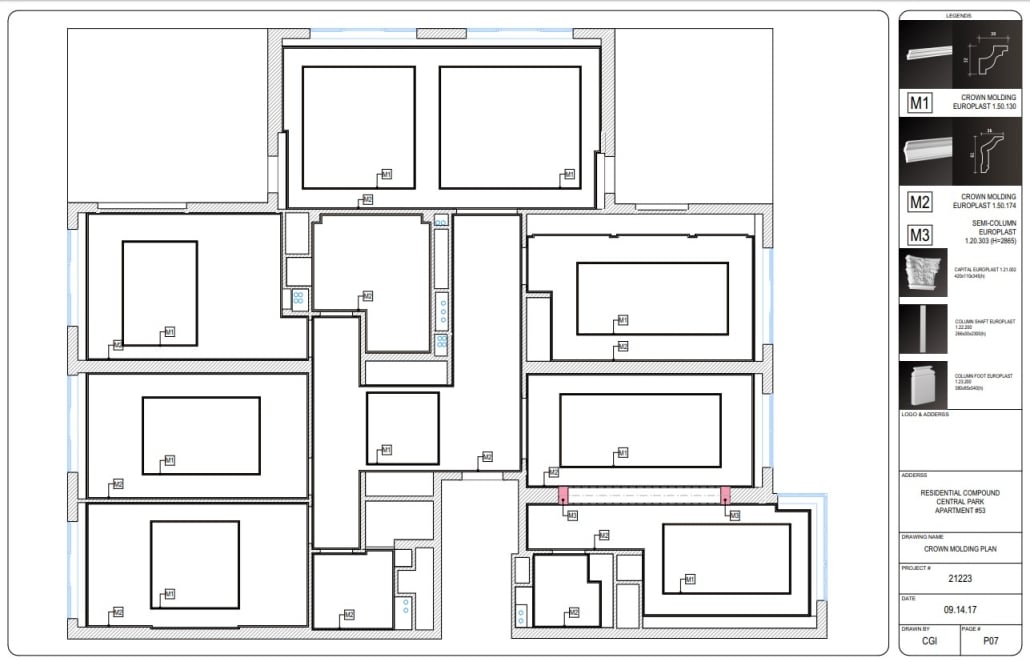
A reflected ceiling plan (RCP) is a drawing that illustrates the dimensions, materials, and other elements of the ceiling. It takes its name from the concept that you’re looking down at the ceiling as though reflected onto the floor below. These interior drawings include information everyone involved in the project needs. In particular, they list the info about lighting, sprinklers, smoke detectors, or any other object on the ceiling.
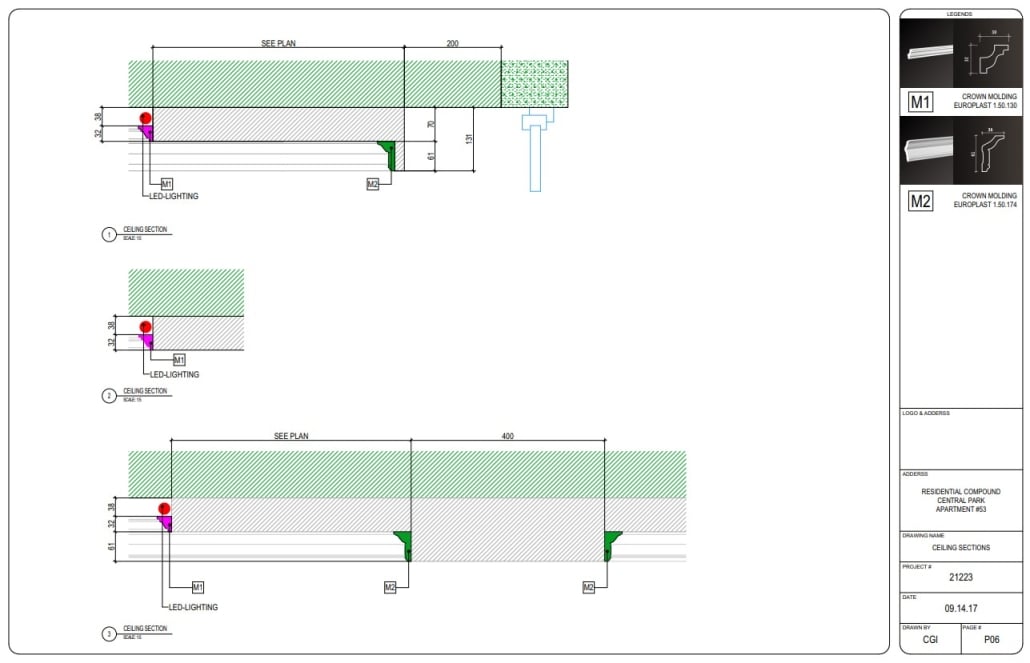
Thanks to such drawings, it’s possible to understand how to raise the ceiling level or make it lower. This way, the designers can define the type of ceiling they can choose for the project. This drafting also includes section drawings focusing on structure and crown molding plans, which are detailed drawings of eaves and baseboards.
#8. Floor Covering Drafts
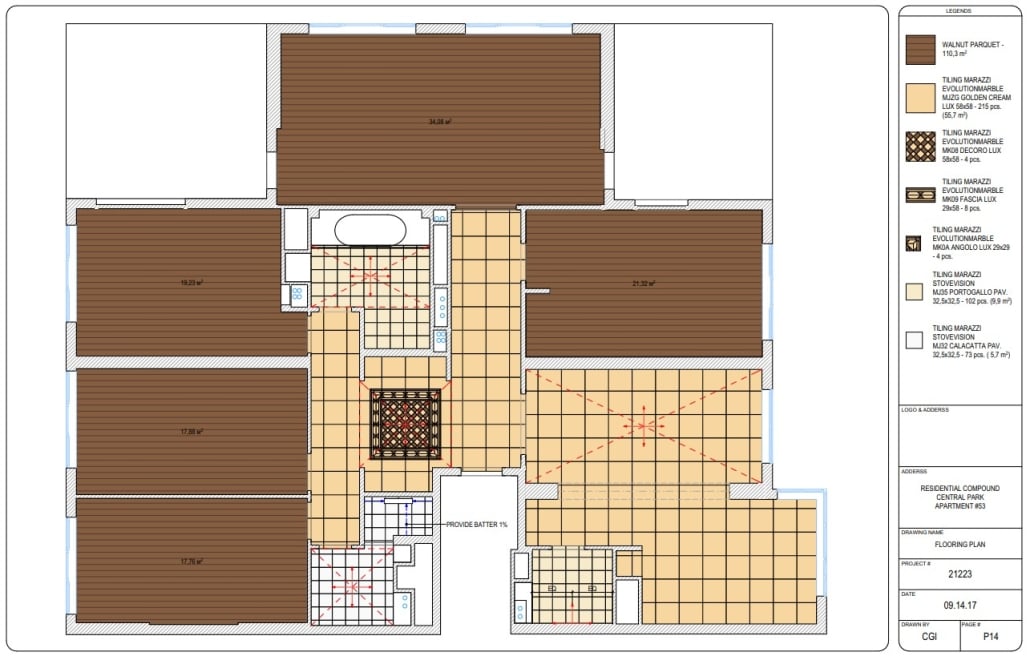
The final position on our interior design drawings list is taken by floor covering drafts. These are scale drawings of the flooring area with details about the project. Mainly, they include covering and underlay materials, positioning of seams and joints, direction of the pile, types of accessories used, or any other special features. They are also necessary for redevelopment and changing levels of the flooring. For instance, they can help incorporate steps, elevations, and thresholds in an interior design. Besides, such draftings as heating layouts can aid in constructing heated floors quickly and effectively, which is vital for contractors.
#9. Site Plans
Site plans step outside the walls. They map the territory around the house: where cars pull in, where the garden beds and benches go, how the outdoor lighting runs. For projects with a pool, a barbecue corner or a fire terrace, the site plan is where those zones stop being a vague wish and get real dimensions. Clients often see their own house differently once the plan is on the table, and it is cheaper to argue with a drawing than with poured concrete. Site plans, floor plans and everything in between are what residential drafting covers on a house project.
#10. Mounting and Dismantling Layouts
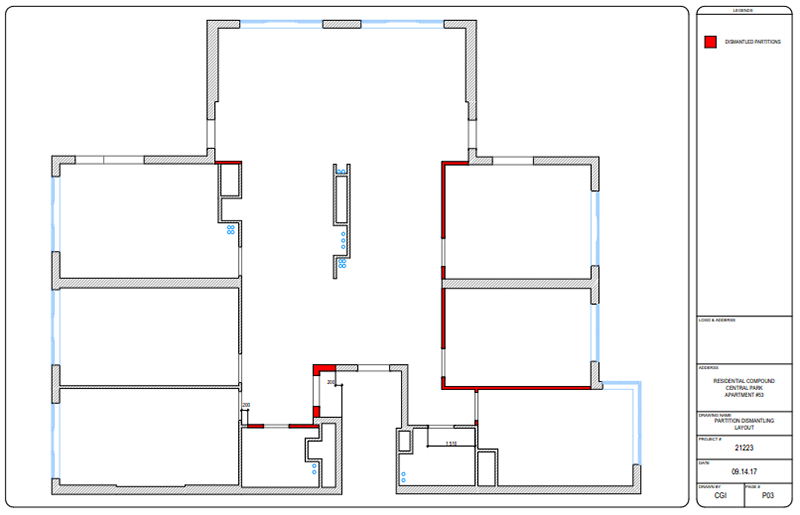
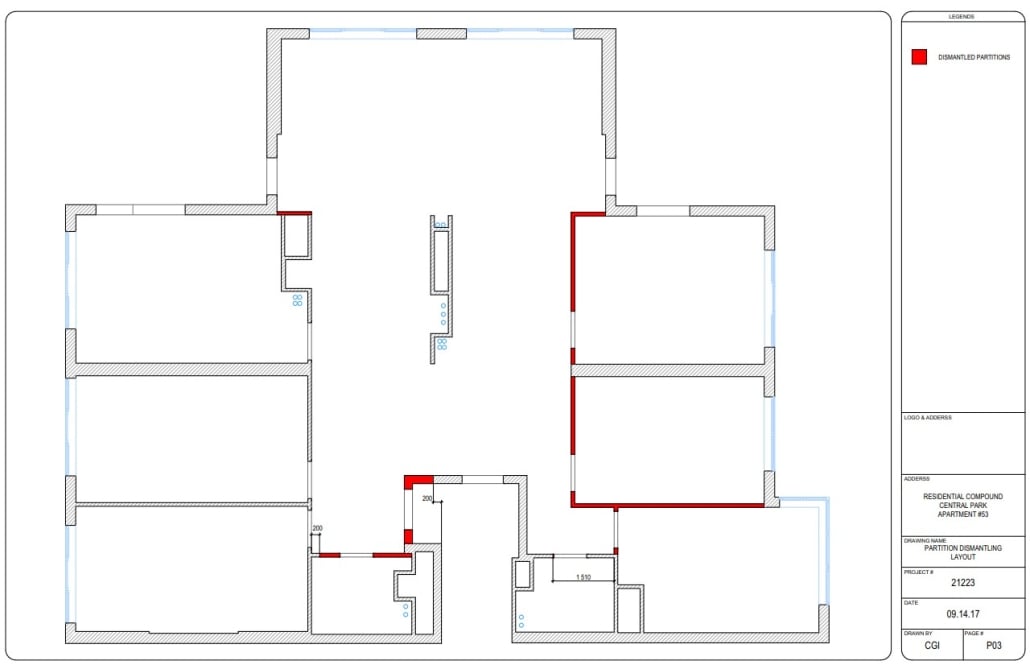
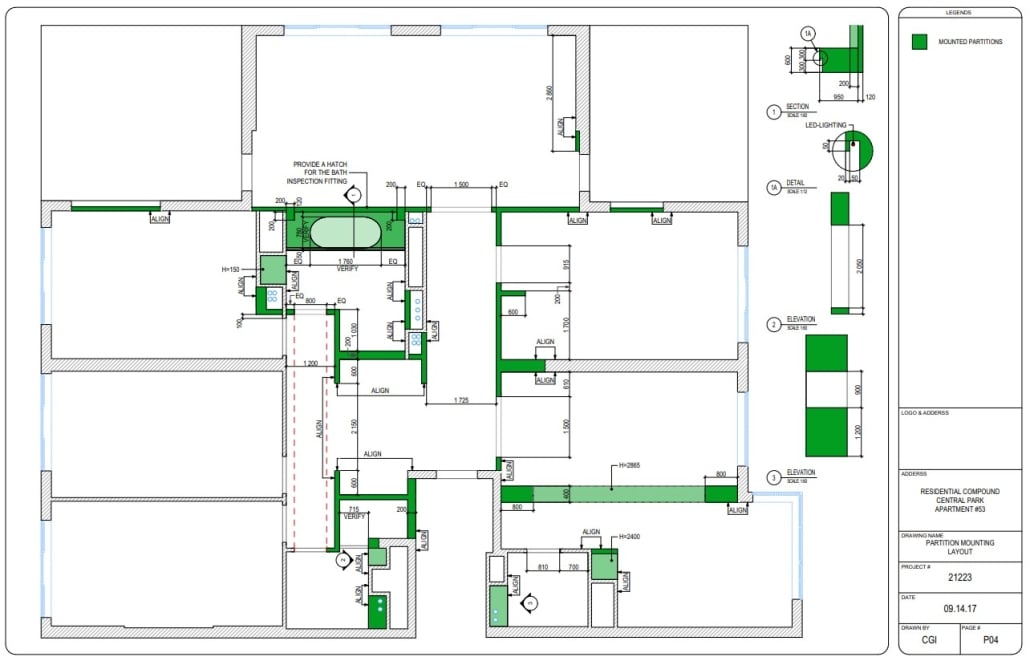
Mounting and dismantling layouts run the show in renovations. The sheet marks which partitions come down and which get built, usually in red, so the crew on site does not have to interpret anything. In apartment replanning this drawing carries legal weight too, approvals go faster when the changes are documented properly. One clear layout saves a wall that was never supposed to fall.
#11. AC and Heating Layouts
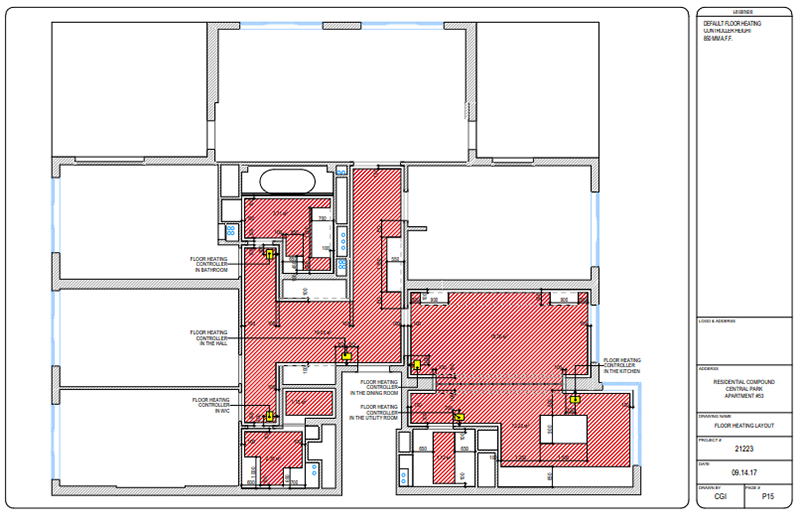
AC and heating layouts plan the climate before the finishes lock everything in. Floor heating zones with their controllers, radiator and AC unit positions, routes for refrigerant lines. These decisions hide under screed and behind drywall, which is exactly why they get drawn first: moving a floor heating controller on paper takes a minute, moving it after the tile is laid takes a crowbar.
Need the whole set for a real project? Our interior design drafting services cover every type on this list, drawn to your standards at $20 per hour.
Professional drafting services can provide you with all the options from this interior design drawings list. They are essential not only for the development of design or renovation but also for its flawless implementation. Interior drafting can help designers decide on renovation solutions and understand what construction or repair works they need to organize. On top of that, contractors also need all this engineering data to execute design projects at the highest quality level.
What the Whole Set Is Called, and What It Contains
People ask for this package under half a dozen names. Interior design construction documentation is the formal one. On site you will hear working drawings, and older contractors still say blueprints, a word left over from the days when prints really were blue. Interior design documents, drafts, drawings: all the same stack of paper.
What matters is what is inside it. A complete set holds the eleven drawings above, a title block on every sheet, a revision history, and the schedules that say which fixture, finish or fitting goes where. Without the schedules the drawings are just shapes, and somebody on site starts guessing.
The format question comes up straight after. You get DWG files so your contractor can measure and mark them up, and a PDF of every sheet for printing and approvals. Both go out together, because the person approving the design and the person building it rarely use the same software. After the build there is another audience entirely. Agents and developers work from a different stack, so the five main types of real estate drawings are worth knowing about if the property will be marketed. Colour matters most there, and 3D architectural drawings for real estate sell a layout to buyers in a way a black and white sheet never manages.
Wonder how much high-quality drafting services cost? Check out the examples of our real projects with pricing.
Want to complete your design projects with the most satisfying results? Use our company’s drafting services to get top-notch CAD interior design drawings for your projects.
Interior Design Drawings FAQ
What are interior design drawings called?
Construction documentation is the term you will see on a contract. Day to day people say working drawings, drafts, or plans, and plenty of contractors still call them blueprints. They all point at the same set: plans, elevations, sections and schedules that describe the finished interior well enough to build it.
What is included in interior design construction documentation?
The eleven drawings listed above, plus the parts nobody photographs: a title block on every sheet, a revision history so you know which version is current, and schedules for fixtures, finishes and fittings. The schedules are what turn a nice drawing into something a contractor can order from.
Do you really need all eleven drawings?
No, and most projects do not. A cosmetic refresh may need a furniture layout and a lighting plan and nothing else. A gut renovation with moved walls and rerouted services needs close to the full list. The honest test is whether a trade would have to guess at anything.
In what order are interior drawings produced?
The floor plan comes first, because everything else measures off it. Then furniture layout, then the ceiling and lighting, then services, then elevations and details for anything built to order. Changing the plan late is what makes a project expensive, since every sheet downstream has to follow.
What file formats do interior design drawings come in?
DWG so your contractor can measure and mark up, and a PDF of every sheet for printing and sign off. We send both, because the person approving a design and the person building it almost never open the same software. Ask early if you need RVT instead and we work in Revit from the start.
Need these drawings for your own project? Our interior drafting services page covers the scope and pricing.
For more details, read about why interior designers choose computer-aided drafting and how a design draft simplifies renovation.

Irma Prus
Content Writer, Copywriter
Irma writes articles and marketing copy for ArchiCGI. Her dream is that more people discover the power of CGI for architecture. Irma is into neuromarketing, ruby chocolate and Doctor Who series.


My brother wants to build his own house from the ground up, and your article had great information about different types of drawings that are involved in this process. I liked how you said a reflected ceiling plan makes it possible to understand how to raise the level of a ceiling and how to lower it. Thanks; I’ll share this with my brother to help him with the building drawings for his future home.
WOW! Everything that is required to know about planning of an house before construction is mentioned so accurately over here! Good Going!
– Team LINESGRAPH
As you mentioned, drafting is importing when having a home renovated, or a new home built. My sister is really into old colonial homes, and recently purchased one. She would like to add on to it, but doesn’t have any of the original plans. I wonder if she has considered speaking with a drafting company.