
DRAFTING IN AUTOCAD: 5 ADVANTAGES OVER WORKING IN OTHER CAD SOFTWARE

Drafting in AutoCAD is effective for multilevel projects that involve different file formats and tools. This user-friendly software provides functions for both 2D and 3D, which makes the drawing process much easier and faster.
Contents:
- Built-in layouts
- User-friendly interface
- Compatibility with Autodesk software
- 2D and 3D
- 3D view simulation
- The Autodesk family
- Drafting in AutoCAD FAQ
An architectural company orders draftings for their projects from different contractors that use a few types of software. This creates problems with clients since all formats are different, and many of them are not compatible with other programs needed by Architects and Designers. They want to choose one single software that will combine all the features their projects require. It has to be widely-used, simple but multifunctional, and support different file formats. But which program comply with all these requirements? The Architects have no idea what software is better than the other and where to find much-needed information about drawing tools.
Our the checks that separate a good drafting studio has a suggestion that meets all the mentioned criteria – Autodesk’s AutoCAD. Learn what benefits this software has over other CAD programs and how drafting in AutoCAD will help to develop architectural and design projects.
#1. Built-In Layouts
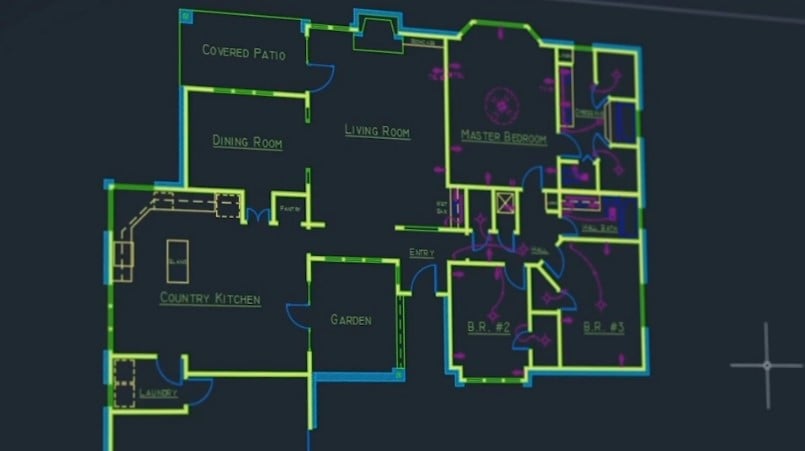
Ready-made layouts for various types of projects simplify and speed up the CAD drawing process several times. Drafting in AutoCAD allows creating a library of custom layouts and use them as the basis for a new task. Most of the free alternatives to AutoCAD stop short of that, which is usually where the licence pays for itself. Moreover, this software offers basic templates as a standard feature. In this way, even beginners have an option to start a drafting task with some boost in the form of simple structural elements they can start with.
#2. User-Friendly Interface
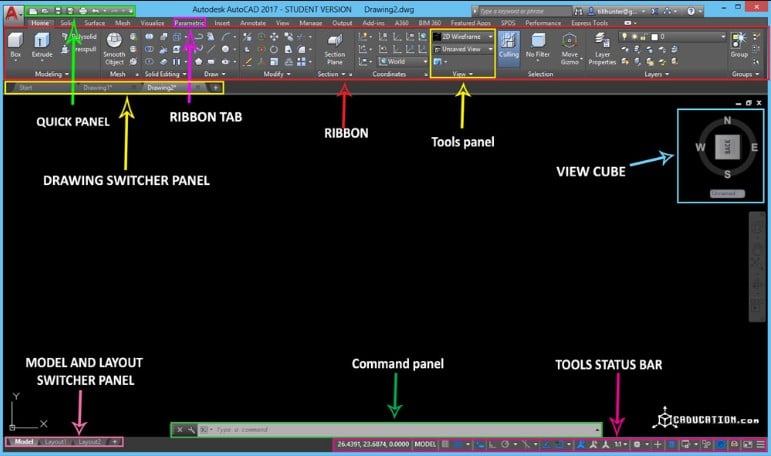
AutoCAD is one of CAD drafting solutions that has a shorter learning curve and a simple interface. It means that users with minimum experience can quickly and easily navigate through all sections and tools of the program. At the same time, the range and possibilities of AutoCAD’s functions are as profound as in some more complicated CAD programs. It means that professionals will be not disappointed with the set of instruments for drafting in AutoCAD either.
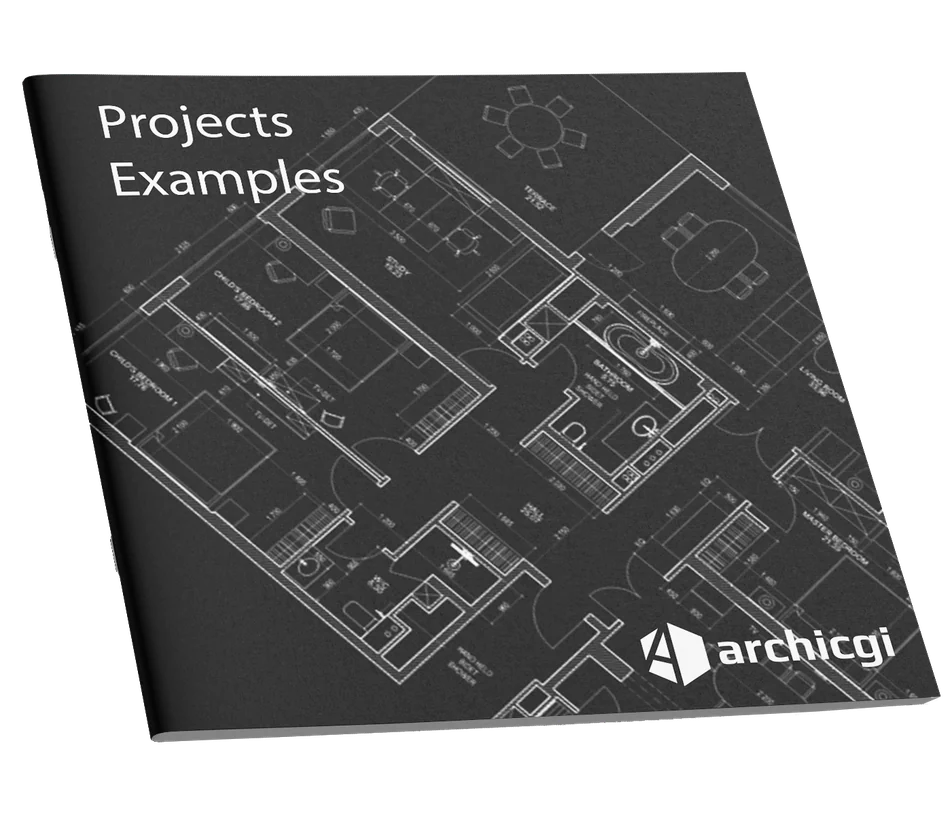
Want to know more about CAD services our studio provides? Check out this archive with projects examples and learn more.
#3. Compatibility with Autodesk Software
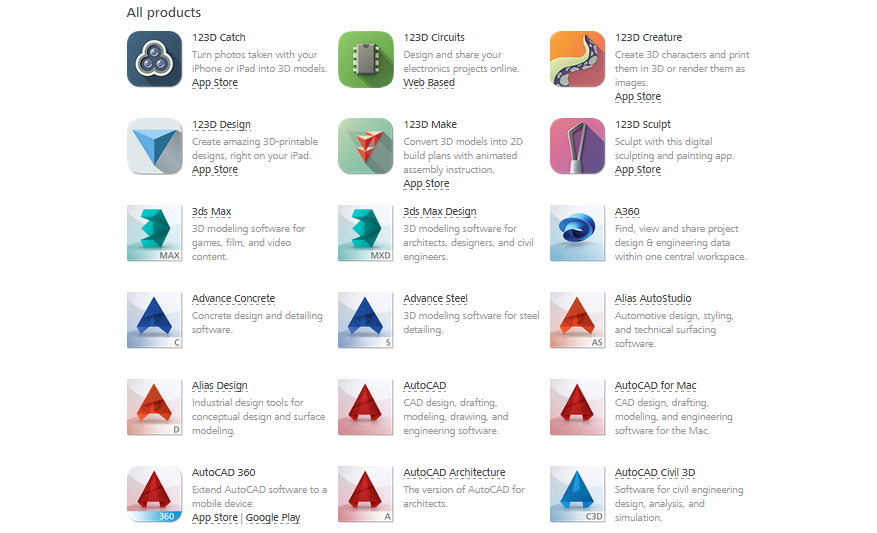
AutoCAD is developed by a well-known company Autodesk, Inc., which produces software for 2D and 3D design. This fact ensures the smooth file transfer from one Autodesk software to another. In fact, CAD for architecture and design projects has at least several stages and often requires the usage of a few programs for each of them. For example, a 3D model from 3ds Max can be transferred to AutoCAD in the form of a 2D view. CAD drawings can be installed to Revit, which makes it possible to build BIM structures based on them, etc.
#4. 2D and 3D
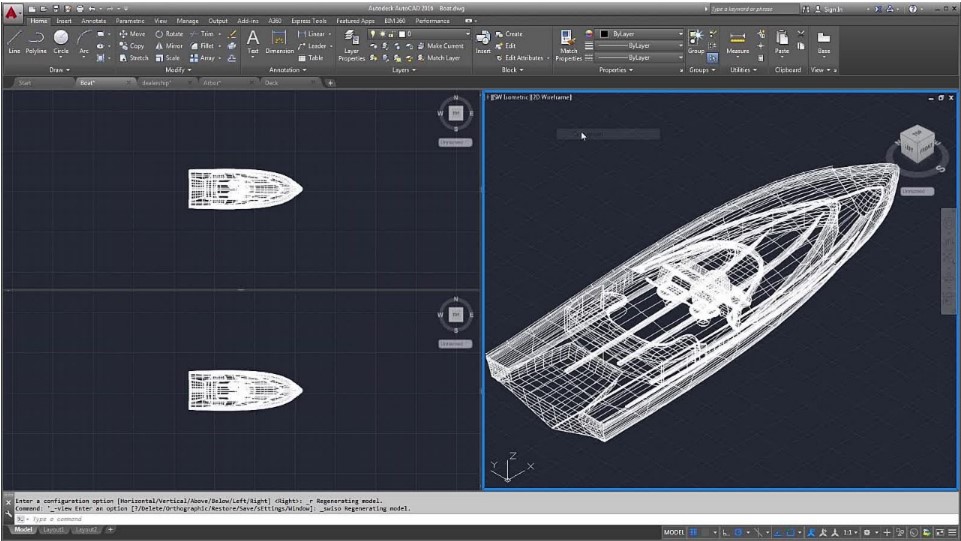
Drafting in AutoCAD includes both 2D and 3D functions, which simplifies the process of more complicated projects. Users can transform one format of task into another with incredible speed without using any third-party software. In this way, Architects and Designers can complete multiple tasks in one go. This is a great advantage compared to many other CAD drafting programs that focus either on 2D or 3D. On top of that, AutoCAD allows digitizing manual drawings into CAD and converting files from one format to another.
#5. 3D View Simulation
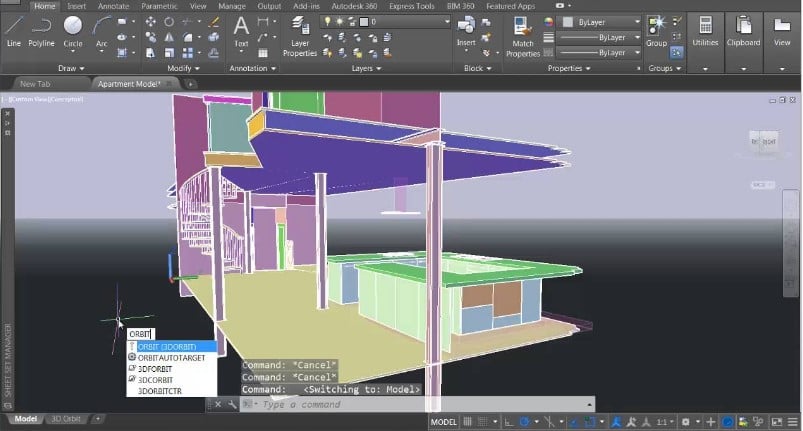
Another major benefit of AutoCAD, especially for large-scale tasks such as construction or interior design, is 3D virtualization. Autodesk is one of the leaders in this technology and provides a 3D-view simulator for architectural and design projects. This tool is a useful function to see CAD draftings in 3D-simulation and imagine how everything will look in reality before starting the implementation. Besides, it helps to detect and fix errors at an early stage and saves a lot of time.
Drafting in AutoCAD is a convenient way to quickly accomplish architectural and design projects in both 2D and 3D. It allows converting various file formats and install them in other Autodesk programs. In addition, AutoCAD is user-friendly, so that even a beginner can quickly figure out how every tool functions. This software is well-balanced for working with different projects as it includes the advantages of more narrowly specialized CAD drafting programs, which makes it suitable for experienced drafters as well.
Wonder how much high-quality drafting services cost? Check out the examples of our real projects with pricing.
Want to develop your project more efficiently and quickly? Use AutoCAD drafting services of our company and get high-quality CAD drawings and 3D designs for any type of task.
The Autodesk Family, and Which Parts Matter for Drafting
People say Autodesk programs and usually mean AutoCAD. Fair enough, though the family is larger than that, and knowing who does what saves paying for a subscription nobody opens.
| AutoCAD | 2D sheets, and the reason DWG became the format everyone exchanges |
| AutoCAD LT | The same without 3D or scripting, cheaper, fine for flat drawings only |
| Revit | BIM. Model once, pull the sheets out of the model |
| Civil 3D | Site work, grading, roads |
| Inventor and Fusion | Mechanical parts, not buildings |
| Navisworks | Combining models from different disciplines and finding clashes |
| 3ds Max | The visualisation end |
For architectural and millwork drafting the useful shortlist stays short: AutoCAD for sheets, Revit when the project is coordinated across disciplines. The rest of that list belongs to other trades. Worth knowing about AutoCAD LT as well, the cheaper cut without 3D and without the programming interface, which suits a studio that produces flat drawings and has no illusions about needing more.
One practical note on compatibility, since the marketing implies it is seamless. Files do move between these programs. They do not always arrive intact, and a Revit model exported to DWG turns up flattened, with layer names nobody chose. Decide what has to leave at the end before deciding where the work starts.
Drafting in AutoCAD FAQ
What is drafting in AutoCAD?
Producing a technical drawing in AutoCAD rather than by hand: lines and geometry in model space at full size, then sheets composed in paper space with viewports, dimensions, annotation and a title block. The output is a DWG that other people can measure off and a PDF for printing. Drafting is the documentation half of CAD, as opposed to modelling or rendering.
Is AutoCAD easy for beginners?
Easier than its reputation, harder than it looks in a tutorial. Drawing a line and dimensioning it takes an afternoon. What takes months is the invisible half: layer conventions, blocks and external references, plotting so a sheet prints at the right scale. If you are hunting for the number to type, we keep an AutoCAD scale factor chart with the viewport and DIMSCALE values beside it. Beginners usually produce drawings that look right and behave badly the moment someone else opens them.
What is the difference between AutoCAD and AutoCAD LT?
LT is the cheaper version without 3D modelling and without the programming interface, so no LISP routines and no custom automation. For a studio producing 2D sheets that is often no loss at all. The moment you need to model something, script a repetitive task or run the specialised toolsets, you are back on full AutoCAD.
Is AutoCAD still worth using when everyone talks about Revit?
They do different jobs, which is why most offices pay for both. Revit is a model that carries data, and it earns that price on coordinated projects with schedules and many disciplines. AutoCAD is where flat documentation is quickest, and it stays the format contractors and fabricators actually want. A fit-out or a millwork package rarely justifies a model.
Which file formats does AutoCAD work with?
DWG is native and the one that matters, since it is what everyone downstream expects. DXF is the neutral exchange format for moving geometry into other software. Beyond that AutoCAD writes PDF and DWF for review, imports PDFs as editable geometry with mixed results, and reads Revit models through export rather than directly.
To dig deeper, see our posts on whether 2D drawing is being replaced by 3D and the 5 most popular CAD file formats. And when it is time to order a set, our CAD conversion services team can help.

Valerie Adams
Blog Writer
Valerie is an editor and content writer. She used to work on news and entertainment TV channels and in a fashion & design magazine. In her spare time, she enjoys visiting foreign countries, art events, film and street dancing festivals.


Leave a Reply
Want to join the discussion?Feel free to contribute!