
HOW TO CHOOSE A DRAFTING COMPANY AND WORK WITH IT
While working on a project, architects and designers need various top-quality drawings but it’s not clear to whom they can entrust this responsible task. No doubt, there are drafting firms who work quickly and at the highest level, but how to find them?
Contents:
- #1. Examine the portfolio
- #2. How they calculate the cost
- #3. CAD software they use
- #4. How many specialists per project
- #5. Customer support
- #6. Deadline guarantees
- #7. NDA agreement
- How to work with the team you picked
- Data security before you send files
- Choosing a drafting company FAQ
Well, traditionally we Google everything on the Internet and get a dozen pages of the results. Amongst those links are all kinds of 2D drafting offers from freelancers and drafting studios alike (and the myth of 2D being replaced by 3D is still alive).. But how to understand which company is a really good one? How to check its professional level before starting a project? And what to pay attention to when comparing different firms? There are 7 main steps of choosing the perfect drafting contractor. Take a look.
#1. Take Time to Examine Company’s Portfolio
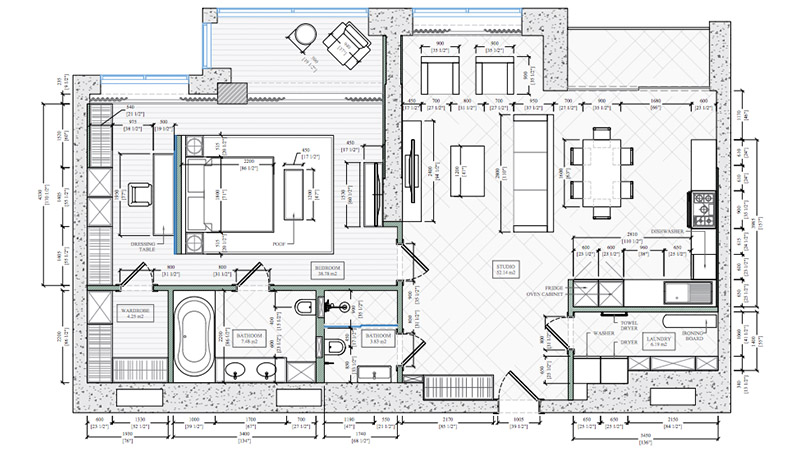
First, one needs to carefully study the portfolio of each candidate to find out if their blueprints are accurate and professional. It’s also important to understand what type of drawings these drafting firms can do: architectural, interior, communications, BIM, rendering, etc.
Usually, the studio’s portfolio says it all. Therefore, it quickly becomes obvious who doesn’t work with the project type that the client needs or is not professional enough.
#2. Learn How Drafting Firms Calculate the Cost

After a part of candidates has been eliminated at the first stage, potential clients should proceed to price comparison. At first, they need to ask a studio’s manager what’s their charging policy. Some drafting firms charge for one drawing sheet, others for one project others or per hour.
Professional CAD contracting companies offer the opportunity to work with their top specialist at a remote full time and pay a monthly fee. This is a convenient working scheme since a large-scale architectural project can take a long time because of its complexity, revisions and urgent changes. Whether a retainer like that beats a salaried hire comes down to how steady your workload is, and both models are laid out side by side in the case for outsourcing CAD services against keeping them in-house. Thus, it makes sense to collaborate with the same specialist who knows all the nuances of the project and is ready for constant communication with the customer.
#3. Ask a Studio’s Manager About CAD Software They Use
It’s extremely important to find out whether a firm works in the same software that a customer needs or not. Often architects outsource only a part of the drawings and, in the end, it turns out that all the drafts are saved in different file formats so the customer can’t even open some of them. It happens so because not all draftsmen work in the same CAD programs, therefore, files simply might not open by soft that a client has.
A good drafting firm uses all the most popular 2D and 3D CAD programs and its specialists use universal file formats. Moreover, they know how to convert a drawing to another format without losing quality. Therefore, far-sighted architectural drafting firms always have a convenient solution to such issues.
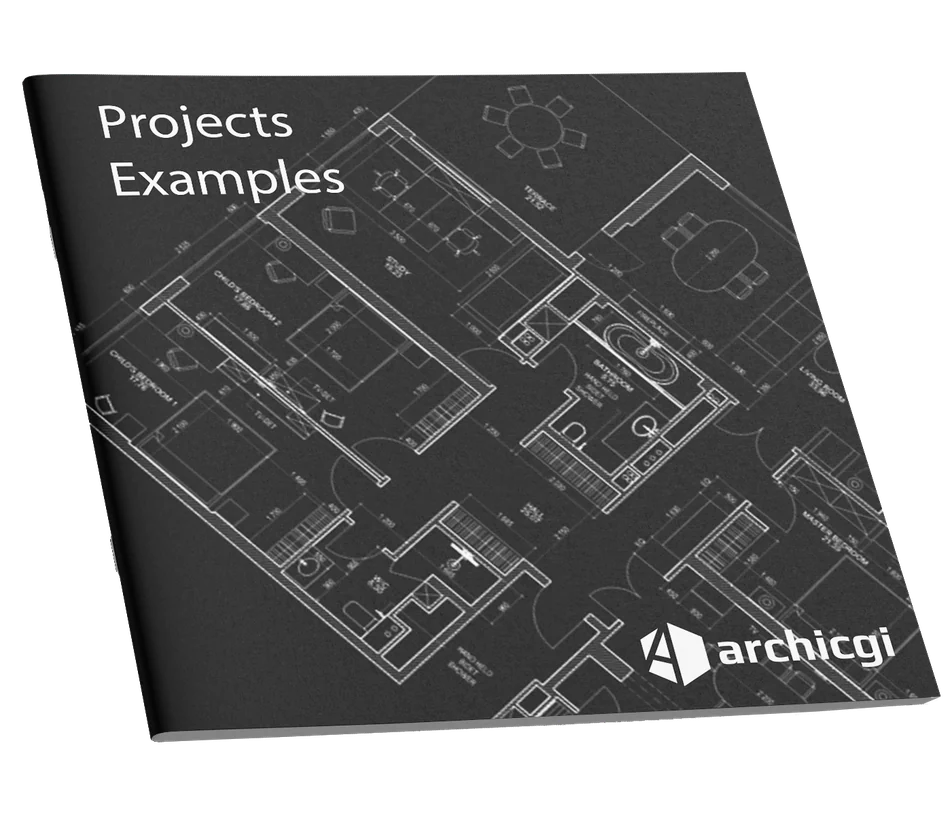
Want to know more about CAD services our studio provides? Check out this archive with projects examples and learn more.
#4. Inquire How Many Specialists Can Work on One Project Simultaneously

When talking with a studio’s manager, it’s always worth clarifying what the maximum number of specialists can work on a project. If a customer has a large project and they need a bunch of drawings, cuts, schemes and sections, it’s ideal to hire lots of specialists to speed up the project. However, if all the draftsmen work from different places or even time zones communication becomes more complicated.
Therefore, the perfect solution is working with a firm that can allocate a big group of specialists for one project. This speeds up the delivery of drawings and simplifies communication.
#5. Pay Attention to Their Customer Support Services

To choose a truly customer-oriented studio, one needs to understand how drafting firms organize the communication process. Do they provide an individual manager for every project? Is there 24/7 customer support? And what customer management systems do they use?
In well-reputed firms, the workflow is transparent and convenient. For example, our studio uses our own CRM-system for communication between a customer and a drafting team. Using a CRM chat, clients can ask draftsmen a question, as well as upload additional materials or make changes to the project.
#6. Ask About Guarantees of Sticking to Deadlines

It’s undeniable, that far-sighted drafting firms value their reputation most of all. They need to keep their customer satisfied so they will always come back, therefore, they don’t break deadlines.
However, before choosing the contractor, architects and designers should clarify what is the studio’s policy on cases if the deadline was violated through the fault of the company. In such situations, good drafting firms offer guaranteed refund so clients feel safe and are confident in their contractors.
#7. Make Sure They Provide a Solid NDA Agreement

For many clients, it’s vital to collaborate with a firm that will keep project data in confidence. Sure, for large-scale construction and projects of high importance, all layouts must not be published because of the security reasons. Also, there’s a tough unethical competition amongst architects and designers, and some of them steal others’ creative ideas and plagiarize from their projects.
Competent drafting firms sign a solid NDA contract not only with their clients but also with the own drafting team. This double security policy guarantees that important materials won’t leak to the Internet.
When choosing between different drafting firms, pay attention to a nice website and portfolio but not only them. Personally contact studio’s managers and make inquiries about their prices, the studio’s experience, drafting software they use, ask about NDA and customer support service. Make sure you have full information before comparing studios and choosing the most competent one for your purposes.
How to Work With the Team You Picked
Choosing is half the job. The rest starts after the contract is signed.
Write the brief properly. Every question a drafter does not have to ask is an hour nobody bills you for. Say what the drawings are actually for, because permit sets, fabrication sets and presentation sets are three different jobs. Name the software and the template. List what you already have, even if it is three phone photos and a sketch on a napkin.
Send references early. A photo of a similar detail settles an argument that three paragraphs of description will not. There is a longer version of this in how to start a good collaboration with an AutoCAD company, written for the first project rather than the tenth.
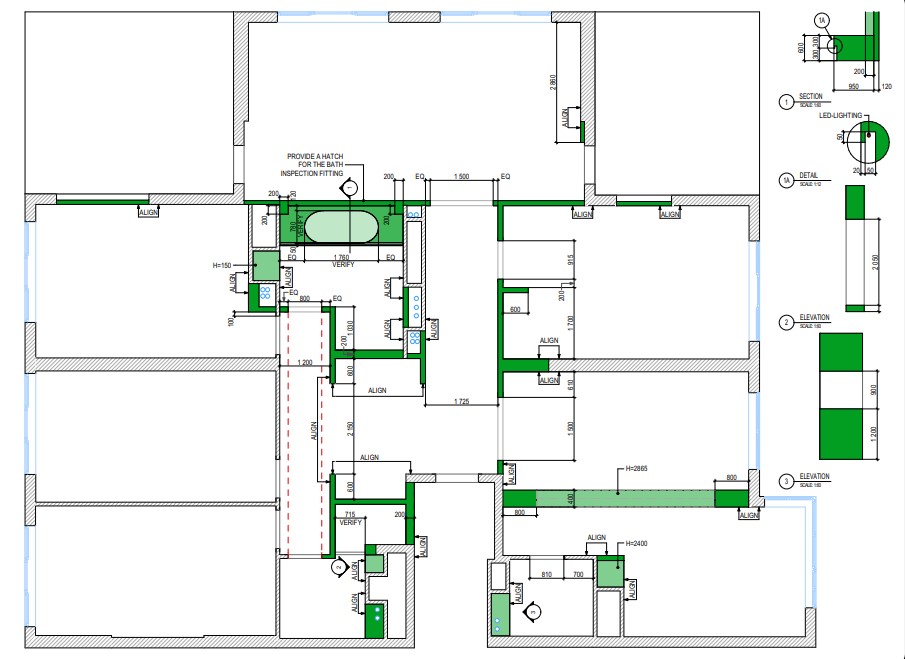
Check the work in progress, not just the delivery. Ask to see the set at roughly a third and again at two thirds. A wrong wall thickness caught on day two costs minutes. The same mistake found at handover costs a redraw and a week.
Batch your corrections. Mark them on the PDF, send them once. Ten emails across three days turn into ten separate revisions and one very confused drafter.
Keep a single contact on each side. Projects routed through three people lose a day at every handoff, and nobody can say later who approved what.
And say when something is good. Teams that hear only complaints start guessing what you want, which is the expensive kind of silence.
Ask About Data Security Before You Send Files
Drawings are business information. Plenty of studios still ask you to email a zip and call it a workflow.
A serious contractor signs an NDA before receiving anything, keeps project files on controlled storage rather than personal drives, and can tell you who on their team has access. Ask that question out loud. The answer takes ten seconds and tells you a lot about the shop.
If you would rather skip the vetting altogether, our outsource drafting guide explains how the process runs on our side, and our drafting services start at $20 per hour with an NDA signed before you send a single file.
Wonder how much high-quality drafting services cost? Check out the examples of our real projects with pricing.
Looking for a good drafting firm? Contact us, we provide all types of top-quality drawing services efficiently and on time!
Choosing a Drafting Company FAQ
How do I check a drafting company before hiring?
Start with the portfolio, and look for your project type specifically, not just pretty sheets. Then ask three questions: how they price, how many drafters they can put on your job, and whether they sign an NDA before receiving files. A small paid test order tells you more than any sales call.
How much do outsourced drafting services cost?
Most studios charge by the hour. Ours is $20 for drafting and $25 for Revit based work, with a free hour estimate before anything starts. Be careful with per-sheet pricing: a sheet can mean anything, and the definition usually favours the seller.
What should I send with the first order?
Whatever you already have: sketches, PDFs, site photos, a point cloud, an old DWG. Add the purpose of the drawings, the deadline, and your template or layer standards if you have them. Ten minutes on the brief saves a round of revisions.
How do I know the drawings will be correct?
Ask to see the set in progress, not only at delivery. Any serious studio runs an internal check before sending anything and includes revisions in the price. Ours covers the first two rounds.
Is my project data safe with an outsourced team?
It is if the contract says so. Look for an NDA signed before files change hands, project storage that is not somebody’s personal drive, and a clear answer about who on the team can open your files.
What is the difference between a freelancer and a drafting studio?
Price is similar, capacity is not. A freelancer is one calendar and no backup. A studio gives you a project manager, an internal reviewer and a second drafter when the deadline tightens.

Daryna Romaniv
Senior Client Manager
Daryna is a Senior client manager at ArchiCGI. She can guide you through our workflow and quickly resolve any issue along the way. In her spare time, Daryna enjoys cooking, reading fantasy books, and watching “Friends”. She also loves traveling, especially to sunny Italy.


I like how you explained that you need to look at a drafting company’s portfolio first. I think a ton of people just hire the first drafting company that they find. They’ll have better chances if they check out multiple drafting companies and their portfolios first.